Sluit menu
Binnenland
Buitenland
Economie
Den Haag
Cultuur
Wetenschap
Sport
Opinie
Columnisten
Tech en Media
Boeken
Leven
Slim leven
In Beeld
Carrière
Klimaat
Recht
Podcast
Archief
Luister naar
Commentaar
Ombudsman
Puzzels
Magazine
Service
Webwinkel
Familieberichten
Over NRC
Service
Bezorgservice
Onderbrekingsservice
Verhuisservice
Mijn gegevens
Mijn abonnementen
FAQ Digitaal Lezen
Nieuwsbrieven
Veelgestelde vragen
Mijn leeslijst
Digitale krant
Wachtwoord vergeten
Menu
NRC
Abonneren
Mijn nieuws
Podcasts
Digitale krant
Puzzels
Mijn NRC
Terug
Lees meer
Inloggen
Neem een abonnement
Mijn nieuws
Mijn leeslijst
Mijn geschiedenis
Digitale krant
Nieuwsbrieven
Onderwerpen
Ik ben abonnee
Neem een abonnement
Instellingen
Weergaveopties
Uitloggen
Hoe kunt u ons bereiken?
Vanwege het coronavirus werken onze medewerkers thuis.
Service
Privacy-instellingen
Notificaties
Lichte weergave
Donkere weergave
Volg instellingen van mijn apparaat
Bezorgservice
Vakantieservice
Verhuisservice
Mijn gegevens
Mijn abonnementen
Abonnement delen
Gedeeld abonnement
FAQ Digitaal Lezen
Veelgestelde vragen
Wachtwoord vergeten
Mijn nieuws
Binnenland
Buitenland
Economie
Den Haag
Cultuur
Wetenschap
Opinie
Boeken
Leven
Carrière
Webwinkel
Puzzels
Al abonnee?
Inloggen
Vandaag
Reportage
CPAC Hungary
‘De harnassen moeten aan’, klinkt het op Wilders’ ultrarechtse feestje in Boedapest
Geert Wilders spreekt vrijdag in Boedapest op CPAC. De eerste conferentiedag was een kruisbestuiving van gevestigde namen en alarmistische influencers. Journalisten waren niet welkom.
Wet betaalbare huur
De Wet betaalbare huur van minister De Jonge komt er dan eindelijk
De huurwet van Hugo de Jonge, die donderdag door de Kamer kwam, is een belangrijke politieke overwinning voor de minister.
Kamerdebat
Van de toeslagen is de politiek en de burger nog lang niet af
Dat er iets moet gebeuren aan het systeem van toeslagen, daar is de Kamer het over eens. Maar hoe dat kan, dat is nog de vraag.
Gaza-oorlog
VS begonnen met bouw noodhulphaven aan de kust van de Gazastrook
Zo’n duizend Amerikaanse militairen zullen betrokken zijn bij de bouw van het platform en de pier waaruit de haven zal bestaan. De aanleg kan tot wel zestig dagen duren.
Antisemitisme
Na ‘explosie van antisemitische incidenten' wil de Kamer concrete actie
In de Kamer klonken veel ideeën en voorstellen om antisemitisme beter te kunnen bestrijden. Wat het kabinet voorstelt, is niet genoeg, vinden de meeste fracties. „We zeiden allemaal: nooit meer, en dat is ook nu”.
Reportage
Italië
Dagje in ‘pretpark’ Venetië? Dat is dan 5 euro
Venetië vraagt toeristen sinds donderdag op de drukste dagen een toegangskaartje te betalen, een wereldprimeur. Reacties lopen sterk uiteen. „Het voelt een beetje bizar, maar ergens snap ik het.”
Reportage
Veehouderij
Mest opslaan in grote zakken, is dat de oplossing voor veehouders? ‘Niemand wil onze mest ophalen’
Minister van Landbouw Piet Adema deed een oproep aan de politiek om de mestcrisis op te lossen. Boeren worden op dit moment al geraakt.
Chemische stoffen
Hoe schadelijk zijn chemische stoffen? De Gezondheidsraad wil meer zicht op de gevolgen van de blootstelling eraan
De Gezondheidsraad wil dat de blootstelling van mensen aan chemische stoffen beter wordt gemeten. Dat gebeurt nu te weinig.
Laatste nieuws
Meer
Deepfake
Vijftien aangiftes tegen verspreiding deepfakeporno BN’ers, video’s verwijderd van website
Ongewenst gedrag
Universiteit Leiden stelt opnieuw hoogleraar op non-actief wegens grensoverschrijdend gedrag
Georgië
Europees Parlement wil voorlopig geen toetredingsonderhandelingen met Georgië vanwege wet ‘buitenlandse agenten’
Koersval
Meta verliest 185 miljard dollar in waarde na aangekondigde investeringen in AI
Ajax
Geschorste directeur Alex Kroes keert terug bij Ajax, als technisch directeur
De Grote Poëzieprijs
Peter Verhelst krijgt De Grote Poëzieprijs voor ‘Zabriskie’
Regering Haïti
Haïtiaanse transitieraad is aangetreden na maandenlange politieke impasse
MeToo-proces
Harvey Weinstein krijgt nieuw proces wegens ‘ongehoorde fouten’ rechter
Analyse
Coalitievorming
De politieke oplossingen liggen niet langer in het midden
Analyse
Toespraak Macron
Macron: Europa kan uitsterven, het hangt af van onze keuzes
Meest gelezen
Reportage
CPAC Hungary
‘De harnassen moeten aan’, klinkt het op Wilders’ ultrarechtse feestje in Boedapest
Interview
Kajsa Ollongren
|
Minister van Defensie
Ollongren: Poetins grens stopt niet bij de NAVO-grens
Misdaad
In Utrecht leer je hoe je een plofkraak in Duitsland kunt zetten
Wet betaalbare huur
De Wet betaalbare huur van minister De Jonge komt er dan eindelijk
Evolutie
Met zijn getrainde vingertoppen ontdekte de blinde bioloog Geerat Vermeij belangrijke wetmatigheden in de evolutie
Meer nieuws
Niet te missen
Recensie
Maatschappijkritiek
Waarom onze obsessie met het hyper-persoonlijke alleen maar tot onmacht leidt
De provocatieve literatuurwetenschapper Anna Kornbluh neemt in Immediacy de hedendaagse cultuur onder vuur, die zwelgt in directe ervaringen. Voor een waardevol kritisch perspectief zijn bedachtzaamheid en reflectie onontbeerlijk.
Evolutie
Met zijn getrainde vingertoppen ontdekte de blinde bioloog Geerat Vermeij belangrijke wetmatigheden in de evolutie
Al ruim vijftig jaar zoekt Geerat Vermeij naar patronen in de evolutie. In zijn nieuwste boek laat hij zien hoe het vermogen van organismen almaar toeneemt – met alle desastreuze gevolgen van dien.
Interview
Kajsa Ollongren
|
Minister van Defensie
Ollongren: Poetins grens stopt niet bij de NAVO-grens
Als demissionair minister van Defensie probeert Kajsa Ollongren (D66) Nederland te doordringen van het gevaar dat Poetin vertegenwoordigt. „We hebben altijd gezegd: Oekraïne zal niet het laatste, maar het éérste land zijn dat wordt aangevallen.”
Interview
Mascha Halberstad
|
regisseur
Mascha Halberstad: ‘Pas als ik zelf moet lachen, zit het goed’
De familiefilms van de Nederlandse animatieregisseur Mascha Halberstad worden vertoond over de hele wereld. Wat is haar geheim?
Analyse
Toespraak Macron
Macron: Europa kan uitsterven, het hangt af van onze keuzes
Minder regels, meer investeringen en een betere samenwerkingen zijn volgens de Franse president Macron nodig om Europa levensvatbaar te houden. „Het wakker worden gaat te langzaam.”
Boeken
Interview
Michal Citroen over Joodse onderduikers: ‘De klap kon op elk moment komen’
In Een adres verzamelde journalist Michal Citroen aangrijpende verhalen van Joodse onderduikers. „Laat niemand ooit meer denken dat Joden zelf schuld hadden.”
Recensie
Koloniale geschiedenis
Alfred Birney: als Indo is hij nergens thuis
In zijn nieuwe boek met artikelen en brieven laat Alfred Birney zien dat er nog altijd een schrijnend gebrek bestaat aan historische kennis van het voormalige Nederlands-Indië.
Recensie
Poëzie
Met de poëzie van Sofie Verdoodt daal je af in de onderwerelden van de geest
De genomineerden voor de Grote Poëzieprijs, die deze donderdag wordt uitgereikt, zoeken hun weg in een wereld in crisis. De onderwerelden waarin Sofie Verdoodt afdaalt, liggen dicht bij het huiselijke. Ze weet het dagelijkse onder grote spanning te zetten.
Meer
Meer
Opinie & Columns
Opinie
Asielbeleid
De asielcrisis is een politiek maaksel van de PVV en VVD
Formerende partijen praten niet over echte problemen: huisvesting, arbeid en armoede. Er is geen asielcrisis maar een morele crisis, die politiek geweld koppelt aan onverschilligheid meent Galina Cornelisse.
Opinie
Grondstoffen
Westerse grondstofhonger maakt klimaatbeleid onrechtvaardiger
De energietransitie leidt tot een nieuwe ‘goudkoorts’ voor mineralen als koper, lithium en kobalt. Meer aandacht voor deze materiële voetafdruk moet onrechtvaardigheid voorkomen, betogen vier Utrechtse onderzoekers.
Column
Aylin Bilic
Wie alles gedenkt, gedenkt eigenlijk niets
Sommigen willen de groep slachtoffers die we gedenken op 4 mei uitbreiden. Maar daarmee verdwijnt het apolitieke karakter van de Dodenherdenking.
Meer Opinie & Debat
Meer
Beste van NRC
Belastingen
Hoe chemiebedrijf OCI zijn aandeelhouders miljarden uitkeert en de fiscus met lege handen achterblijft
Chemieconcern OCI betaalt 5 miljard euro aan zijn aandeelhouders – belastingvrij, via handig gebruik van de wet. Nederland loopt zo 750 miljoen euro dividendbelasting mis.
Voetbalshirts
En toen bleek mijn Arsenal-shirt uit ’95 nep
NRC-redacteur en voetbalshirtverzamelaar Peter Zantingh dacht een echte Dennis Bergkamp te hebben gescoord. Waarom was het zo erg dat hij werd opgelicht – en had hij beter kunnen weten?
Europese verkiezingen
Op wie kan je stemmen bij de Europese verkiezingen 2024?
Op 6 juni kiest Nederland 31 Europarlementariërs. Wie zijn de kandidaten? NRC zet de lijsttrekkers voor u op een rij.
PFAS uitgediept
Het kleinste stukje PFAS
Ongezien is al het water op aarde vervuild geraakt met een stof die niet kapot te krijgen is. Een stof die niet in de natuur voorkomt, maar inmiddels wel terug te vinden is in de sneeuw op de hoogste bergtoppen en in de allerdiepste oceanen. Én in het drinkwater.
Meer Beste van NRC
Meer
De meest recente podcasts
Podcast Oorlog in Oekraïne
Hoe lang houdt het Oekraïense leger de strijd nog vol?
Podcast
Waarom hebben mensen geen winterslaap?
Podcast
Perfectionisten kampen met een imagoprobleem
Podcast
Het weglopen van Wilders: crisis of theater?
Podcast
Documentairemaker Sinan Can over zoeken naar menselijkheid in tijden van oorlog
Podcast
Aflevering 8: Conclusies
Podcast
Aflevering 8: Hoe een samenleving de Zwarte Dood overleeft
Meer
Meer
Mijn nieuws
Meer artikelen
Meer
Binnenland
Deepfake
Vijftien aangiftes tegen verspreiding deepfakeporno BN’ers, video’s verwijderd van website
Tientallen filmpjes van BN’ers, Kamerleden en leden van het Koninklijk Huis zouden inmiddels van een pornowebsite zijn verwijderd.
Misdaad
In Utrecht leer je hoe je een plofkraak in Duitsland kunt zetten
Zestien Nederlandse plofkrakers staan sinds deze week voor de Duitse rechter. Duitse automaten zijn slechter beveiligd en een geliefd doelwit, maar de misdaad is opvallend vaak terug te voeren tot de stad Utrecht. Daar stond zelfs een ‘plofkraakschool’. De gemeente wil ex-plofkrakers op het rechte pad brengen en betere samenwerking met Duitsland.
Reportage
Dierbaar werk
Met zo’n groenstrook hoeven insecten geen kilometers te vliegen voor hun ontbijt
Bibi Dumon Tak interviewt dierenredders. Deze week: van de berm langs sportvelden maken vrijwilligers een walhalla voor insecten.
Meer Binnenland
Meer
Politiek Den Haag
Volg
Politiek Den Haag
Analyse
Coalitievorming
De politieke oplossingen liggen niet langer in het midden
Voorkeuren van de VVD-kiezers maken het voor die partij haast onmogelijk om níet ‘over rechts’ te formeren. De PVV wordt steeds meer acceptabel.
Derdelanders
Derdelanders uit Oekraïne mogen uitspraak hof in Nederland afwachten
Gevluchte mensen met een tijdelijke Oekraïense verblijfsvergunning mogen alsnog hun hoger beroep in Nederland afwachten.
Vandalisme
Partijkantoor ChristenUnie beklad, partij overweegt aangifte
Mensen schrijven en plakken „dingen op het kantoor die niet oké zijn”, zei partijleider Mirjam Bikker woensdag. „Woorden als dat wij van de genocide zijn en dat soort dingen.”
Asielzoekers
IND moet asielaanvragen Palestijnen onmiddellijk in behandeling nemen
Het demissionaire kabinet besloot in december dat asielaanvragen van Palestijnen uit Gaza en de Westelijke Jordaanoever moesten wachten. De IND moet die aanvragen per direct toch gaan behandelen, oordeelt de Raad van State.
Meer Den Haag
Meer
Buitenland
Reportage
Oorlog in Oekraïne
In Cherson komt het gevaar van raketten, granaten, bommen en drones. Elke seconde kan de laatste zijn
Er is veel aandacht voor de strijd in Oost-Oekraïne, maar ook in het zuiden wordt volop gevochten. In de provincie Cherson vormt de Dnipro-rivier de frontlinie. Op pad met een Oekraïense brigade. „Ik ben in de beste jaren van mijn leven. Ik wil niet met een machinegeweer schieten.”
Reportage
Chinese invloed
Salomonseilanden zijn China’s sleutel tot de Pacific: ‘We zijn een slaaf van de grootmachten’
Op de Salomonseilanden, een arme maar strategisch gelegen eilandengroep in de Stille Oceaan, groeit de Chinese invloed. De onvrede hierover leidde tot rellen. ‘Tegenwoordig is het overal Chinatown.’
Hongaarse conservatieven
De Orbán achter Orbán: hoe Hongarije een model wil zijn voor conservatief Europa
De Hongaarse premier Viktor Orbán wil de EU omvormen tot een ultraconservatief bouwwerk waarin geen plaats is voor liberalen en ‘wokisten’. Zijn meesterbrein is Balázs Orbán. Geen familie-van. Wel de machtige schaduwpremier. En fan van Geert Wilders.
EU-China
Grote inval bij Chinees bedrijf Nuctech, Brussel voert strijd tegen vermeende oneerlijke concurrentie
De Europese Commissie heeft dinsdag invallen laten doen bij onder meer een Rotterdamse vestiging van het Chinese Nuctech, dat beveiligingsapparatuur maakt. Het is niet het enige onderzoek in verband met mogelijke oneerlijke concurrentie.
Meer Buitenland
Meer
Economie
Koper
Mijnbedrijf BHP wil zijn grote concurrent overnemen
Het Australische mijnbedrijf BHP wil zijn concurrent Anglo American kopen. Het doel: de markt voor koper in handen krijgen.
Veiligheid
Dirk van den Broek introduceert bodycams voor medewerkers, privacywaakhond bezorgd
Draagbare camera’s kunnen volgens supermarktketen Dirk van den Broek de-escalerend werken bij onveilige situaties.
Faillissement
‘Veelbelovend’ techbedrijf Rodeo failliet verklaard, oprichter onvindbaar
De Amsterdamse start-up beloofde investeerders duizelingwekkende groei, maar is nu failliet. De oprichter lijkt onvindbaar.
Meer Economie
Meer
Wetenschap
In beeld
Reuzenslang herrijst uit de Indiase mythologie
Wekelijks een opmerkelijk beeld van een wetenschappelijke gebeurtenis. Deze week: een slang die wel vijftien meter lang kon worden.
Column
Peter Kuipers Munneke
Satellieten als scherprechters voor milieu en klimaat
Dankzij satellieten kunnen we steeds beter zien wat zich op aarde afspeelt, schrijft Peter Kuipers Munneke. Niets schimmigs blijft verborgen.
Jong geleerd
‘Een sociale robot hoeft er niet uit te zien als een mens’
Sociale robots zijn bedoeld om contact te maken met mensen. Hoe zorg je dan dat zo’n robot subtiel menselijk gedrag onder de knie krijgt? „Het interpreteren van elkaars blik is heel belangrijk.”
Durf te vragen
Waarom word je de ene keer sneller dronken van alcohol dan de andere keer?
Per persoon en per moment verschilt het enorm hoe snel je dronken wordt.
Meer Wetenschap
Meer
Cultuur
Recensie
Jazz
|
●●●●
Rust in de chaos: de spannend geweven, vloeiende jazzcomposities van Linda May Han Oh
In moderne glasheldere jazz zoekt Amerikaanse bassiste Linda May Han Oh met haar band rust in chaos. In het Amsterdamse Bimhuis viel haar intense basspel op: strak, beslist en wat huppelend.
Jeugdtheater
Van diep in het bos naar de verste uithoeken van het heelal in jeugdtheater tijdens de meivakantie
In de meivakantie bieden verschillende theatermakers fantasierijke werelden voor een jong publiek aan. NRC licht er drie uit.
Recensie
Klassiek
●●●●
Altviolist Antoine Tamestit trekt je mee in de mysterieuze klankwereld van Sofia Goebaidoelina
Jaap van Zweden is deze week te gast bij het Concertgebouworkest. Tsjaikovski’s ‘Vierde symfonie’ is het lokkertje, maar vooral indrukwekkend is het ‘Altvioolconcert’ van Sofia Goebaidoelina, met Antoine Tamestit als solist.
Songfestival
Het Songfestival wil niet politiek zijn, maar lukt dat rond de deelname van Israël ook?
Het Songfestival ziet zich als een a-politiek evenement, maar de deelname van Israël is uiterst beladen. De Israëlische kandidaat heeft haar teksten aangepast en de stad Malmö is een vesting geworden.
In Beeld
In beeld
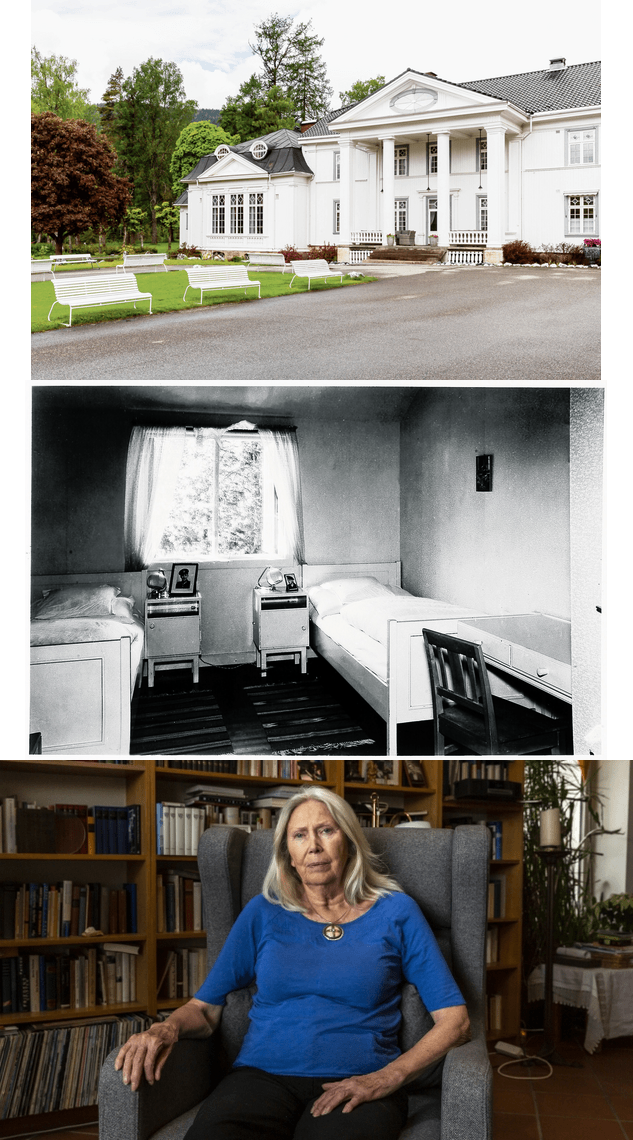
Hier moesten Ariërs geboren worden
Angeniet Berkers verdiepte zich in Lebensborn-huizen. Daar bevielen in WO II veel alleenstaande moeders van kinderen die zij niet mochten houden, maar die wél een toevoeging zouden zijn voor het Arische ras.
Fotoprijs
World Press Photo bekroont ‘piëta’ van de Gaza-oorlog
De World Press Photo van het Jaar toont een treurende Palestijnse vrouw in Gaza, met op schoot het lichaam van haar omgekomen nichtje dat ze omarmt en tegen zich aan klemt. Ook minder actuele foto’s werden bekroond.
In Beeld
Gazanen keren terug naar het verwoeste noorden
Sinds steeds meer Israëlische troepen zich terugtrekken uit het noorden van Gaza, keren veel ontheemde Palestijnen terug naar hun inmiddels verwoeste woonplaats. Op beelden is te zien hoe duizenden mensen met bagage, fietsen en karren over de levensgevaarlijke kustweg naar het noorden van Gaza lopen.
In beeld
De terugkeer van Oleksandr Revtjoech naar het burgerleven
Oleksandr Revtjoech stoot met een rechtse directe in op zijn tegenstander. Acht maanden nadat hij zijn linkerarm en het grootste deel van zijn linkerbeen heeft verloren door mijnontploffingen tijdens gevechten in Oekraïne revalideert hij in de boksring.
Meer In Beeld
Meer
Leven
Interview
Lunchen met
Dirigent Elim Chan: ‘Als ik het niet weet, denk ik: wat zou Haitink doen?’
Elim Chan, tot mei chef-dirigent van het Antwerp Symphony Orchestra, wil de muziek laten vertellen wat haar lichaam moet doen, géén gebaren instuderen. Het is „een risico” om het zo te doen, maar; „Ik probeer het.”
Toekomst van wonen
Wonen in Nederland: eenheidsworst. Dat het anders kan, zie je hier
Niet in een rijtjeshuis of appartement wonen, maar experimenteler? Dat kan, maar je moet wel een flinke dosis tijd, geduld en doorzettingsvermogen hebben.
Interview
Samengesteld gezin
Jasperina Roozendaal schreef een boek over stiefmoeder zijn: ‘Het is hartstikke leuk’
Jasperina Roozendaal schreef een boek dat ze zelf wel had kunnen gebruiken: over vrolijk stiefmoederschap. Gesprek met haar en haar stiefdochters: „Opeens was ik niet meer zenuwachtig als ze kwamen, maar blij.”
DC van Hall
De opmars van de huurkazerne lijkt niet te stoppen. Armzalige eenkamerappartementen, op elkaar gestapeld
‘De woningmarkt is af’, zei VVD-minister Stef Blok in 2017 toen hij Volkshuisvesting afschafte. Sindsdien rukken de proletarische huurkazernes op, stelt Bernard Hulsman vast.
Meer Leven
Meer
Carrière
Spitsuur
‘In ons leven zit nu meer regelmaat’
Eigenlijk willen Jos en Willemijn Hummelen-van der Veen in Afrika wonen en werken, maar zoon Anne heeft in Nederland medische zorg nodig. „We delen een hang naar ‘iets doen’ voor de wereld en willen onze horizon verbreden.”
Dilemma's op de werkvloer
Mag je klagen over je gratis maaltijd?
Je krijgt op kosten van je werkgever een diner tijdens elke avonddienst. Alleen: het is niet te eten, en je vermoedt dat de cateraar het zich zo makkelijk mogelijk heeft gemaakt om zoveel mogelijk te verdienen. Mag je daar wat van zeggen?
Zo werkt dat
Zo word je een vredestichter (op je werk)
Als er iets is waar managers een grote hekel aan hebben, dan is het ruzie in hun team. Jeanne Brett en Stephen Goldberg deden vele decennia onderzoek naar conflicten.
Rubriek
Spitsuur
‘We leven hier erg van dag tot dag’
Bertine van der Velde (44) en Ron Pierlot (52) runnen in de Achterhoek een pleeggezin met drie kinderen. Dat is hard werken; Bertine zegde haar baan op om fulltime voor de kinderen te kunnen zorgen. „Het is zwaar én het is mooi.”
Meer Carrière
Meer
Tech en Media
Recensie
De Podcastclub
Hoe je verder moet zonder geheugen hoor je in deze podcast
Anna Vossers is duidelijk gefascineerd door de podcast over het geheugenverlies van Jur. Maar toch blijft er iets schuren.
Recensie
De Podcastclub
Zo fileer je een boek met verborgen verderfelijke boodschappen
Anna Vossers luistert naar een podcast waarin een journalist en een jurist zelfhulpboeken fileren en pseudowetenschap tegen het licht houden. Het resultaat is fascinerend.
Tv-recensie
Jeroen Pauw verricht geen wonderen bij minister Yesilgöz
Wonderen kun je niet afdwingen. Maar je kunt wel iets bespreekbaar maken door er een vraag over te stellen. Jeroen Pauw vroeg niet naar de waarheid en dus kwam de minister van Justitie goed weg. Ondertussen gaat de zoektocht naar een goddelijke ingreep in Lourdes door.
Interview
Dagblad
Scheidend hoofdredacteur van ‘Trouw’: ‘De journalistieke fraude deed veel pijn’
Na tien jaar stopt Cees van der Laan als hoofdredacteur van Trouw. Hij gelooft in dienstbaar leiderschap en zag de krant - en Nederland - veranderen. „De krant is losgeraakt van de protestantse kerken, net als veel lezers, die zijn meegereisd.”
Meer Tech en Media
Meer
Sport
Column
Marijn de Vries
Is Jutta Leerdam een diva of gewoon sterk?
Ik ben dat paternalisme soms zo zat. Daarmee doel ik niet direct op Sven Kramer, die voelt zich gewoon op zijn edele delen getrapt omdat hij heeft verloren. Nee, ik bedoel de paternalistische teneur in het algemeen. De teneur van ‘doe dat toch niet, meisje’.
bestuurscrisis
Ajax-leden maken zich op voor confrontatie Alex Kroes en raad van commissarissen
Donderdagavond komen de leden van de vereniging Ajax bijeen om zich te laten bijpraten over het ontslag van directeur Alex Kroes. Dat kan leiden tot een confrontatie die de nabije toekomst van de club bepaalt.
Skiën
Nederlandse skibond is ‘verguld’ met de komst van tweevoudig olympisch kampioen Marcel Hirscher
De Oostenrijkse topskiër Marcel Hirscher (35) gaat na vijf jaar zijn comeback maken. Hij zal uitkomen voor Nederland, het land van zijn moeder. „Ik wil vooral weer aan wedstrijden meedoen omdat ik het leuk vind.”
Doping
Dopingzaak van Chinese zwemmers uit 2021 roept veel vragen op – ‘Ze hadden direct geschorst moeten worden’
Onderzoek van de ARD en The New York Times wijst uit dat 23 Chinese zwemmers begin 2021 positief testten op een hartmedicijn. Straffen bleven uit, de Chinese zwemploeg won later dat jaar in Tokio drie keer olympisch goud. Hoe kon dit gebeuren?
Meer Sport
Meer
Ondertussen
Ikje
Goede manieren
Mijn dochter en schoonzoon zijn de trotse ouders van een bijna tweejarige zoon. Het opvoeden is een beetje begonnen en tot hun vreugde werpt dat vaak goede vruchten af.
Digitale detox
Samen offline in het café met The Offline Club: ja gezellig
Praten, lezen en de mobiel uit: cafébijeenkomsten van The Offline Club zijn een succes, merkt Sandra Heerma van Voss.
Chansons
Jacques Brel in Bergen: steek dat geld in je reet, schreeuwt de zanger
Zestig jaar na het roemruchte optreden van Jacques Brel in het Noord-Hollandse Bergen wordt het concert overgedaan.

:format(webp)/s3/static.nrc.nl/images/gn4/stripped/data114767590-1087bf.jpg)
:format(webp)/s3/static.nrc.nl/images/gn4/stripped/data114774406-06c0d7.jpg)
/s3/static.nrc.nl/images/gn4/stripped/data114777565-6b021a.jpg)
/s3/static.nrc.nl/hpe/8651b29-web-2504BUI_gazaport.jpg)
/s3/static.nrc.nl/images/gn4/stripped/data114782471-8adcd0.jpg)
/s3/static.nrc.nl/images/gn4/stripped/data114765148-424dd4.jpg)
/s3/static.nrc.nl/images/gn4/stripped/data114777705-b893f0.jpg)
/s3/static.nrc.nl/images/gn4/stripped/data114769406-f92ed5.jpg)
/s3/static.nrc.nl/wp-content/uploads/2024/04/1496765871.jpg)
/s3/static.nrc.nl/wp-content/uploads/2024/04/web-2504binunileiden.jpg)
/s3/static.nrc.nl/wp-content/uploads/2024/04/georgia-politics-democracy-law-parliament-demo.jpg)
/s3/static.nrc.nl/wp-content/uploads/2024/04/web-2504ecometa.jpg)
/s3/static.nrc.nl/wp-content/uploads/2024/04/afc-ajax-amsterdam-v-fc-twente.jpg)
/s3/static.nrc.nl/images/gn4/stripped/data114768833-1a1c71.jpg)
/s3/static.nrc.nl/wp-content/uploads/2024/04/web-2504buihaiti.jpg)
/s3/static.nrc.nl/images/gn4/stripped/data114769623-431bc6.jpg)
/s3/static.nrc.nl/wp-content/uploads/2024/04/25203214/data114775021-f768cc.jpg)
/s3/static.nrc.nl/images/gn4/stripped/data114767479-aaea87.jpg)
/s3/static.nrc.nl/images/gn4/stripped/data114767590-1087bf.jpg)
/s3/static.nrc.nl/wp-content/uploads/2024/04/25143518/data114676668-ab090f.jpg)
/s3/static.nrc.nl/wp-content/uploads/2024/04/25160221/data114725302-5b1b00.jpg)
/s3/static.nrc.nl/images/gn4/stripped/data114774406-06c0d7.jpg)
/s3/static.nrc.nl/wp-content/uploads/2024/04/23151231/data114642749-31ac63.jpg)
/s3/static.nrc.nl/bvhw/files/2024/04/data114715307-3557e0.jpg)
/s3/static.nrc.nl/wp-content/uploads/2024/04/23151231/data114642749-31ac63.jpg)
/s3/static.nrc.nl/wp-content/uploads/2024/04/25143518/data114676668-ab090f.jpg)
/s3/static.nrc.nl/wp-content/uploads/2024/04/23154200/web-2404CULvosenhaas4.jpg)
/s3/static.nrc.nl/images/gn4/stripped/data114767479-aaea87.jpg)
/s3/static.nrc.nl/images/gn4/stripped/data114715343-b8540c.jpg)
/s3/static.nrc.nl/bvhw/files/2024/04/data114722452-c46566.jpg)
/s3/static.nrc.nl/images/gn4/stripped/data114721830-5d9cb6.jpg)
/s3/static.nrc.nl/bvhw/files/2024/04/data114690843-93695c.jpg)
/s3/static.nrc.nl/images/gn4/stripped/data114678228-2925bb.jpg)
/s3/static.nrc.nl/bvhw/wp-content/blogs.dir/114/files/2020/06/bilic-alylin5bij3.png)
/s3/static.nrc.nl/images/gn4/stripped/data114680237-81633a.jpg)
/s3/static.nrc.nl/wp-content/uploads/2024/04/22142053/web-2304CULLEV_ShirtPeter5.jpg)
/s3/static.nrc.nl/wp-content/uploads/2024/04/19104711/web-2304BUI_verkiezingeneu.jpg)

/s3/static.nrc.nl/wp-content/uploads/2024/04/1496765871.jpg)
/s3/static.nrc.nl/wp-content/uploads/2024/04/25160221/data114725302-5b1b00.jpg)
/s3/static.nrc.nl/wp-content/uploads/2024/04/22122258/data114435019-16f227.jpg)
/s3/static.nrc.nl/wp-content/uploads/2024/04/25203214/data114775021-f768cc.jpg)
/s3/static.nrc.nl/images/gn4/stripped/data114761197-970cbd.jpg)
/s3/static.nrc.nl/wp-content/uploads/2024/04/web-2404bincu.jpg)
/s3/static.nrc.nl/images/gn4/stripped/data114713055-f318f0.jpg)
/s3/static.nrc.nl/wp-content/uploads/2024/04/24182927/data114718669-649fbc.jpg)
/s3/static.nrc.nl/images/gn4/stripped/data114724366-b1059b.jpg)
/s3/static.nrc.nl/images/gn4/stripped/data114715762-05ac8d.jpg)
/s3/static.nrc.nl/images/gn4/stripped/data114726562-142fad.jpg)
/s3/static.nrc.nl/images/gn4/stripped/data114773441-74ed0b.jpg)
/s3/static.nrc.nl/images/gn4/stripped/data114770713-d1be11.jpg)
/s3/static.nrc.nl/images/gn4/stripped/data114715514-91ff0a.jpg)
/s3/static.nrc.nl/images/gn4/stripped/data114528963-b3967e.jpg)
/s3/static.nrc.nl/bvhw/wp-content/blogs.dir/114/files/2023/05/kuipers-munneke-peter-1.png)
/s3/static.nrc.nl/images/gn4/stripped/data114649187-82f686.jpg)
/s3/static.nrc.nl/images/gn4/stripped/data114712824-c2198e.jpg)
/s3/static.nrc.nl/images/gn4/stripped/data114774529-907e65.jpg)
/s3/static.nrc.nl/images/gn4/stripped/data114760110-0f1463.jpg)
/s3/static.nrc.nl/images/gn4/stripped/data114764118-f76452.jpg)
/s3/static.nrc.nl/images/gn4/stripped/data114723190-13fdc6.jpg)
/s3/static.nrc.nl/wp-content/uploads/2024/04/18103842/Copy-of-Copy-of-Homepage-gifje-met-fade.jpg)
/s3/static.nrc.nl/inbeeld/files/2024/04/web-inbeeldgazareturn11.jpg)
/s3/static.nrc.nl/inbeeld/files/2024/04/1104ingukraineamputees11.jpg)
/s3/static.nrc.nl/wp-content/uploads/2024/04/23143212/data113874206-7bae67.jpg)
/s3/static.nrc.nl/wp-content/uploads/2024/04/23091143/data114524854-18155a.jpg)
/s3/static.nrc.nl/wp-content/uploads/2024/04/23114457/data114675257-052474.jpg)
/s3/static.nrc.nl/wp-content/uploads/2024/04/23131540/data114525178-abe09d.jpg)
/s3/static.nrc.nl/images/gn4/stripped/data114716120-7a87a6.jpg)
/s3/static.nrc.nl/wp-content/uploads/2024/04/22104011/web-2204ECO_dilemma_KRAAKMAN.jpg)
/s3/static.nrc.nl/bvhw/files/2024/04/data114519270-f0eef7.jpg)
/s3/static.nrc.nl/images/gn4/stripped/data114479181-0de2bf.jpg)
/s3/static.nrc.nl/bvhw/files/2024/04/data114765421-a7b06b.jpg)
/s3/static.nrc.nl/bvhw/files/2024/04/k9zro32pxohrzhs1mj4p8w1hemb2.jpeg)
/s3/static.nrc.nl/images/gn4/stripped/data114760993-8b69e6.jpg)
/s3/static.nrc.nl/images/gn4/stripped/data114715655-d15371.jpg)
/s3/static.nrc.nl/bvhw/wp-content/blogs.dir/114/files/2022/06/vries-marijn-de-2022-05-02-1280-web.png)
/s3/static.nrc.nl/images/gn4/stripped/data114728852-0ff92d.jpg)
/s3/static.nrc.nl/images/gn4/stripped/data114719770-c2906b.jpg)
/s3/static.nrc.nl/images/gn4/stripped/data114645735-0554c4.jpg)
:format(jpeg):fill(f8f8f8,true)/s3/static.nrc.nl/bvhw/wp-content/blogs.dir/114/files/2019/07/ikje5bij3-1.png)
/s3/static.nrc.nl/images/gn4/stripped/data114641072-bb8d94.jpg)
/s3/static.nrc.nl/images/gn4/stripped/data114522869-2fc3ac.jpg)