Sluit menu
Binnenland
Buitenland
Economie
Den Haag
Cultuur
Wetenschap
Sport
Opinie
Columnisten
Tech en Media
Boeken
Leven
Slim leven
In Beeld
Carrière
Klimaat
Recht
Podcast
Archief
Luister naar
Commentaar
Ombudsman
Puzzels
Magazine
Service
Webwinkel
Familieberichten
Over NRC
Service
Bezorgservice
Onderbrekingsservice
Verhuisservice
Mijn gegevens
Mijn abonnementen
FAQ Digitaal Lezen
Nieuwsbrieven
Veelgestelde vragen
Mijn leeslijst
Digitale krant
Wachtwoord vergeten
Menu
NRC
Abonneren
Mijn nieuws
Podcasts
Digitale krant
Puzzels
Mijn NRC
Terug
Lees meer
Inloggen
Neem een abonnement
Mijn nieuws
Mijn leeslijst
Mijn geschiedenis
Digitale krant
Nieuwsbrieven
Onderwerpen
Ik ben abonnee
Neem een abonnement
Instellingen
Weergaveopties
Uitloggen
Hoe kunt u ons bereiken?
Vanwege het coronavirus werken onze medewerkers thuis.
Service
Privacy-instellingen
Notificaties
Lichte weergave
Donkere weergave
Volg instellingen van mijn apparaat
Bezorgservice
Vakantieservice
Verhuisservice
Mijn gegevens
Mijn abonnementen
Abonnement delen
Gedeeld abonnement
FAQ Digitaal Lezen
Veelgestelde vragen
Wachtwoord vergeten
Mijn nieuws
Binnenland
Buitenland
Economie
Den Haag
Cultuur
Wetenschap
Opinie
Boeken
Leven
Carrière
Webwinkel
Puzzels
Al abonnee?
Inloggen
Vandaag
cyberaanvallen
AIVD: meer dreiging cyberaanvallen door Rusland en China, vaker spoedmaatregelen genomen
De minister moest afgelopen jaar veel vaker spoedtoestemming geven om cyberaanvallen, te weren schrijft de AIVD in zijn jaarverslag.
Durfinvesteerders Californië
Smijten met geld doen ze nog steeds in Silicon Valley, maar wel met meer discipline dan vroeger
Het goedkope geld is opgedroogd in Silicon Valley. Durfkapitalisten kijken kritischer naar start-ups, die door krimpende waarderingen onder financiële druk staan. Enkele Nederlandse techondernemers in de regio wisten wel vers groeigeld aan te trekken. Wat is hun geheim?
Rwanda-deal
Omstreden ‘Rwanda-deal’ is rond: waarom is het land zo populair voor asieldeals?
Het Verenigd Koninkrijk gaat asielzoekers naar Rwanda sturen. Dat heeft zichzelf – geïnspireerd door autoritair geleide landen als Singapore – ontwikkeld tot een aantrekkelijke partner voor westerse regeringen.
Oorlog in Oekraïne
Charkiv moet helemaal leeg, klinkt het op de Russische staatstelevisie
De verwoesting van de televisietoren van Charkiv, de tweede stad van Oekraïne, lijkt onderdeel van een Russisch plan om de inwoners het leven onmogelijk te maken.
Europarlement
Medewerker AfD-lijsttrekker Brussel vast om spionage voor China
Maximilian Krah werd zelf eerder ondervraagd door de FBI vanwege contacten met een pro-Russische Oekraïner. Nu is een naaste medewerker opgepakt omdat hij voor China zou hebben gespioneerd.
Oorlog in Oekraïne
Oekraïne schort consulaire hulp op voor mannen met dienstplichtige leeftijd in buitenland
Oekraïense mannen met een dienstplichtige leeftijd (vanaf 25 jaar) in het buitenland krijgen niet langer consulaire hulp van het ministerie van Buitenlandse Zaken. Willen ze hier toch aanspraak op kunnen blijven maken, dan moeten ze terugkeren naar Oekraïne.
Klimaatverandering
In Zuid-Koreaanse ‘babyklimaatzaak’ dagen ouders de staat voor de rechter
In de naam van kinderen en baby’s wordt in Zuid-Korea de staat voor de rechter gedaagd om ontoereikend klimaatbeleid. Het is de eerste keer dat in Oost-Azië zo’n rechtszaak plaatsvindt.
Rechtspraak
Gerechtshof: NRC en De Limburger publiceerden rechtmatig over bevoordeling CDA’er Knops
Oud-minister Knops (CDA) was bevoordeeld voor tienduizenden euro’s bij de koop van een bouwperceel. NRC onthulde dat in 2020. Knops procedeerde tot het gerechtshof, dat NRC nu in het gelijk stelt.
Laatste nieuws
Meer
Discriminatie
Vorig jaar kwart meer meldingen van discriminatie, twee keer zoveel daders veroordeeld
Duurzaamheid
SCP: Mensen met laag inkomen leven duurzamer, terwijl rijken zich meer zorgen maken over het klimaat
Woningbouw
Aantal woningen dat eraan zit te komen daalde afgelopen jaar licht
Sociaal medium X
Australische premier over Elon Musk: ‘Een arrogante miljardair die denkt dat hij boven de wet staat’
Openbaar Ministerie
‘Rampzalig’ ict-probleem teistert het Openbaar Ministerie: ‘Het is een veelkoppig monster’
Oversteek
Vijf migranten komen om bij oversteek tussen Frankrijk en Verenigd Koninkrijk
Infectieziekte
OMT: Nederland moet zich behoeden voor grote uitbraak van de mazelen
Schulden
Arnhem wil schuld van tientallen gezinnen opkopen, zonder tegenprestatie
Rwanda-deal
Brits parlement akkoord met plan deportatie asielzoekers naar Rwanda
Militaire technologie
Drie Duitsers opgepakt op verdenking van spionage voor China
Meest gelezen
Oorlog in Oekraïne
Charkiv moet helemaal leeg, klinkt het op de Russische staatstelevisie
Rwanda-deal
Omstreden ‘Rwanda-deal’ is rond: waarom is het land zo populair voor asieldeals?
Column
Petra de Koning
Een cadeau voor de heer Poetin, van de PVV
Durfinvesteerders Californië
Smijten met geld doen ze nog steeds in Silicon Valley, maar wel met meer discipline dan vroeger
Japke-d. denkt mee
Je recyclede élk koffiebekertje, en: je wás er. Zelfs jij verdient salarisverhoging, en zo fix je dat
Meer nieuws
Niet te missen
Interview
Antoine Driessen
Rabobank moet zijn klanten beter bedienen. En deze reorganisatie helpt, zegt regionale directeur
Hebben Rabobank-leden na de nieuwste reorganisatie nog wel een stem? Ja, zegt regionaal directeur Driessen. „Coöperatief is niet alleen een marketingterm.”
Opgevoed
Hoe hou je je kind bij drugs weg?
„Uw pogingen om het gebruik van drugs en tabak bij uw kinderen te ontmoedigen doen ertoe”, reageert een deskundige op de lezersvraag. „Maar kennis van de gevaren werkt alleen maar als u het goede voorbeeld geeft.”
Voetbalshirts
En toen bleek mijn Arsenal-shirt uit ’95 nep
NRC-redacteur en voetbalshirtverzamelaar Peter Zantingh dacht een echte Dennis Bergkamp te hebben gescoord. Waarom was het zo erg dat hij werd opgelicht – en had hij beter kunnen weten?
Japke-d. denkt mee
Je recyclede élk koffiebekertje, en: je wás er. Zelfs jij verdient salarisverhoging, en zo fix je dat
Het is weer tijd voor de functioneringsgesprekken. Zie je er tegenop? Nergens voor nodig, vindt Japke-d. Bouma. Zelfs jíj hebt recht op salarisverhoging. Pak deze lijst erbij, en bereken hoeveel!
Reportage
Tweedehands winkels
China heeft geen traditie van tweedehands kleding, maar nu duiken er steeds meer vintagewinkels op
Gebruikte kleding dragen was in China tot nu toe een beetje taboe. Maar in een hippe buurt in Sjanghai is vintage in opkomst.
Slim Leven
Volg
Slim Leven
Koningsdaggids
Zo verkoop je vlot op de vrijmarkt en andere tips voor Koningsdag
Vrijmarkten, festivals, oranje tompoezen en feestvierende Oranjes in Emmen; zaterdag is het Koningsdag. In deze gids geven we tips voor wat je op die dag kunt doen, hoe je het beste kunt verkopen en wat je kunt eten.
Nu in het theater
Dit zijn de beste theatervoorstellingen die je nu kunt zien
Iedere maand verschijnen er tientallen nieuwe voorstellingen in de Nederlandse theaters. Welke zijn écht de moeite waard? NRC maakte een selectie van de voorstellingen die je niet mag missen.
NRC tipt
Van Ripley tot Ronja - dit zijn de beste series van het moment
Welke tv-series van dit moment zijn de moeite waard? NRC selecteert de titels die je niet mag missen op streamingdiensten als Apple TV+, Disney Plus, HBO Max en Netflix.
Meer Slim Leven
Meer
Opinie & Columns
Column
Petra de Koning
Een cadeau voor de heer Poetin, van de PVV
Ze zijn er nog wel, VVD’ers die níét in een kabinet willen met de PVV. Maar je hoort ze nauwelijks nog.
Column
Eva Meijer
De vraag naar betekenis is niet alleen een politieke kwestie
Ik ben niet erg geschikt voor het leven. Dat weet ik al dertig jaar en ik ben eraan gewend. Ik heb mijn leven anders vormgegeven dan de meeste mensen die ik ken.
Commentaar
Universitaire media
Bij de universiteit hoort vanzelfsprekend een vrije pers
Overal in Nederland staat de positie van universitaire media onder druk.
Meer Opinie & Debat
Meer
Beste van NRC
PFAS uitgediept
Het kleinste stukje PFAS
Ongezien is al het water op aarde vervuild geraakt met een stof die niet kapot te krijgen is. Een stof die niet in de natuur voorkomt, maar inmiddels wel terug te vinden is in de sneeuw op de hoogste bergtoppen en in de allerdiepste oceanen. Én in het drinkwater.
Reportage
Beweegarmoede
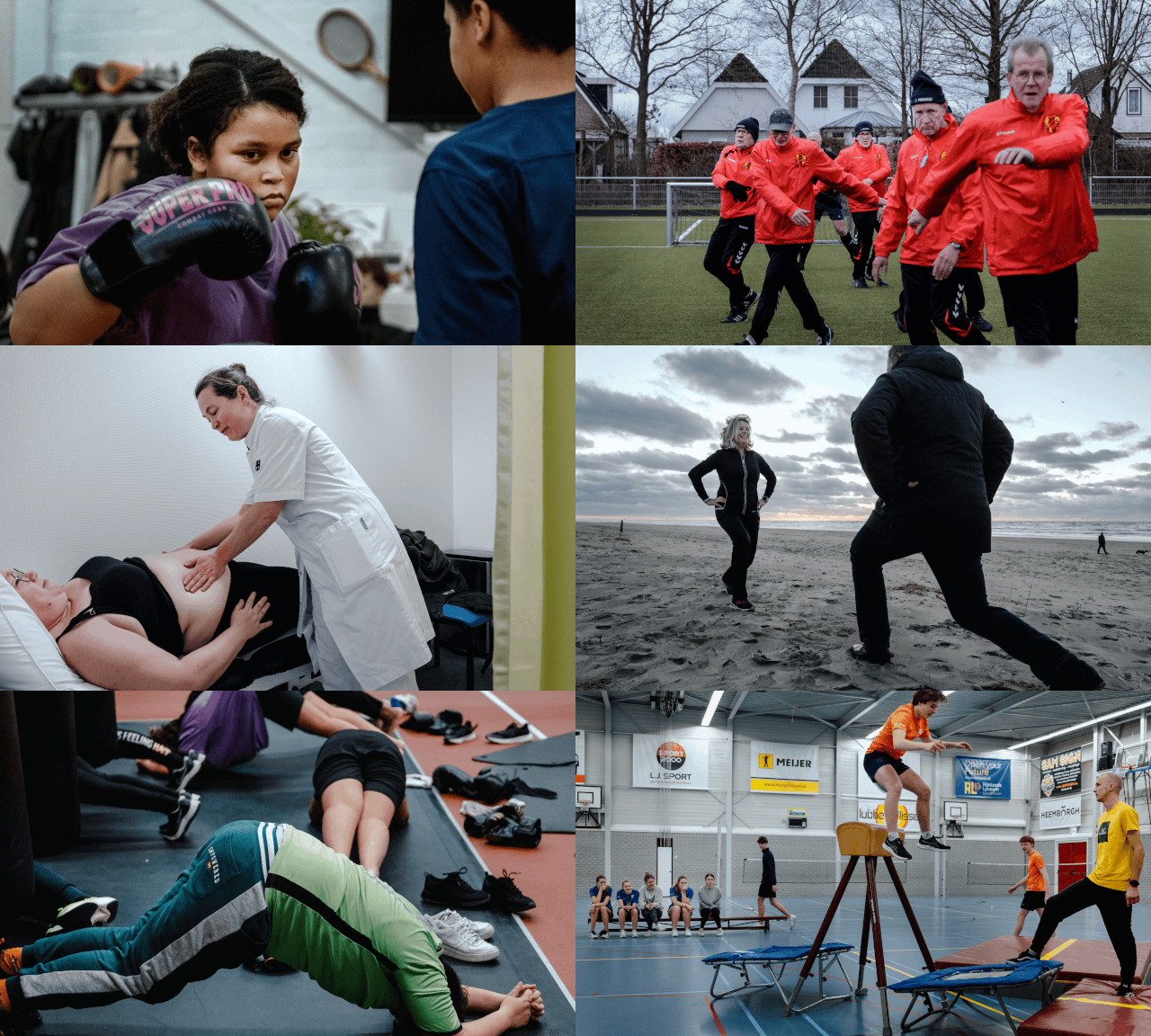
Nederlanders bewegen te weinig. Zelfs bij baby’s van een maand zie je de eerste tekenen daarvan al
Meer dan de helft van de Nederlanders beweegt niet genoeg. Wat doet dat met mensen? Een rondreis van Noordwijk tot Koekange. „Aquafitness, dat gaat nog met mijn lichaam.”
Reportage
Aanvallen Charkiv
‘Huilen komt na de oorlog. Nu moet ik mensen redden.’ Ook onder vuur laat Charkiv de moed niet zakken
De tweede stad van Oekraïne ligt zwaar onder Russisch vuur. „Iedereen voelt spanning.” Maar de inwoners laten zich niet intimideren.
Leeftijdsverificatie
Het ‘hoofdpijndossier’ van de porno-industrie: controleren hoe oud je bezoekers zijn
Nieuwe Europese wetgeving heeft vergaande gevolgen voor pornosites. Hoe controleren ze de leeftijd van gebruikers zonder hun privacy te schenden?
Meer Beste van NRC
Meer
De meest recente podcasts
Podcast
Ligt een stukje kweekvlees straks op jouw bord?
Podcast
Is de jacht op PFAS doorgeslagen?
Podcast
Perfectionisten kampen met een imagoprobleem
Podcast
Het weglopen van Wilders: crisis of theater?
Podcast
Documentairemaker Sinan Can over zoeken naar menselijkheid in tijden van oorlog
Podcast
Aflevering 8: Conclusies
Podcast
Aflevering 8: Hoe een samenleving de Zwarte Dood overleeft
Meer
Meer
Mijn nieuws
Meer artikelen
Meer
Binnenland
Reportage
Woonwagens
Woonwagenbewoners willen zo dicht mogelijk bij het kamp wonen, maar gemeenten maken te weinig plekken
Op het grootste woonwagenkamp van Nederland, De Kring in Groningen, wachten 75 jongeren op een plek. „Het is een ander gevoel, wonen in een wagen. Het is niet uit te leggen.”
Discriminatie
Vorig jaar kwart meer meldingen van discriminatie, twee keer zoveel daders veroordeeld
Dinsdag verschenen twee rapporten waaruit blijkt dat het aantal meldingen van discriminatie in 2023 is toegenomen. Het aantal meldingen bij de politie van antisemitisme is met 60 procent gestegen.
Duurzaamheid
SCP: Mensen met laag inkomen leven duurzamer, terwijl rijken zich meer zorgen maken over het klimaat
Uit nieuw onderzoek blijkt volgens het SCP dat mensen die bezorgd zijn over klimaatverandering, nauwelijks duurzamer leven. Dat geldt voornamelijk voor mensen met een hoger inkomen en met een hbo- of wo-opleiding. Mensen blijken vooral bereid hun gedrag aan te passen als dat goedkoper is.
Meer Binnenland
Meer
Politiek Den Haag
Volg
Politiek Den Haag
Warmtenetten
Raad van State is kritisch op nieuwe warmtewet
Een nieuwe warmtewet moet de transitie naar duurzame en betaalbare warmtevoorzieningen mogelijk maken, maar volgens de Raad van State is het niet duidelijk hoe het wetsvoorstel hieraan bijdraagt.
Reportage
Congres GroenLinks-PvdA
Na vijf maanden stilte gooit Frans Timmermans een steen in de vijver. GroenLinks-PvdA staat open voor regeren met de VVD
Nu de formatiepoging van PVV, VVD, NSC en BBB maar niet lijkt te vlotten kiest Timmermans een hele andere toon. De enige getalsmatig logische combinatie van vier partijen lijkt een breed middenkabinet van GroenLinks-PvdA, VVD, NSC en bijvoorbeeld D66.
Formatie
Drukt een nieuw kabinet straks op de pauzeknop rond het klimaat of wordt het toch de shredder?
Dat de hogere heffing op de CO2-uitstoot voor de industrie het niet zal halen, lijkt een kantelpunt te zijn in de koers van het klimaatbeleid.
Arbeidsongeschiktheid
Ziek in de bijstand: ‘Het voelt onrechtvaardig’
De bijstand is het laatste vangnet voor wie geen baan heeft, maar wel kán werken. Toch zit de regeling vol mensen met langdurige lichamelijke of psychische problemen die daardoor niet aan het werk kunnen. „Ik vraag me af: wat heb ik gedaan om dit te verdienen? Ik ben gewoon ziek.”
Meer Den Haag
Meer
Buitenland
Wapenuitgaven
De wereld gaf nog nooit zoveel uit aan wapens. Hoe ligt die verdeling?
Door de toename van het aantal internationale conflicten is de stijging van de wereldwijde uitgaven aan wapens het grootst in vijftien jaar.
Necrologie
Terry Anderson (1947-2024)
|
Journalist
Vrijlating van wereldberoemde gijzelaar was niet het einde van zijn verschrikking
Bijna zeven jaar lang werd de Amerikaanse journalist gegijzeld in Libanon. Met zijn vrijlating, in 1991, was voor zijn gezin de ellende nog niet voorbij.
Verkiezingen India
Felle kritiek op toespraak Indiase premier om moslimhaat
Tijdens een verkiezingstoespraak haalde de Indiase premier Narendra Modi zondag een moslimvijandige complottheorie aan. Tot woede van critici, die hem verwijten een ‘hindoe-moslim-tegenstelling’ te schetsen.
Reportage
Zuid-Afrika
Zuma, de plaaggeest van het ANC, is terug: ‘We zijn niet te stoppen’
Jacob Zuma (82) is terug als presidentskandidaat in Zuid-Afrika. Met een nieuwe partij en met een nog populistischer agenda brengt hij het ANC, zijn voormalige partij, in het nauw bij de komende verkiezingen.
Meer Buitenland
Meer
Economie
Interview
Witwasaanpak
'Wij zoeken naar spelden in een hooiberg, maar 90 procent van de verdachte spelden is al bekend'
Banken pleiten voor een betere, minder intensieve witwasaanpak. „De maatschappelijke lasten zijn wel heel hoog geworden”, zegt Medy van der Laan voorzitter van bankenkoepel NVB.
Investering Brainport
ASML kan blijven groeien in Brabant: chipmachinemaker en Eindhoven tekenen overeenkomst
ASML tekent een intentieverklaring om te blijven groeien in Brabant. De stad Eindhoven bezit al het merendeel van de grond waar 20.000 nieuwe mensen aan de slag zouden kunnen
Middenhuur
Huurwet Hugo de Jonge stevent af op meerderheid dankzij steun PVV
Met de wet worden huurprijzen in een deel van de vrije huursector aan banden gelegd. De wet ligt politiek erg gevoelig.
Meer Economie
Meer
Wetenschap
Taalkunde
Deze zin van Connie Palmen legt een hiaat bloot in de grammatica: ...ergens graag bij hadden willen horen...
De infinitief kent in het Nederlands geen verleden tijd. Toch kom je het af en toe tegen, zoals in een interview met Connie Palmen.
Interview
Marlisa den Hartog
Jezelf De Sodomiet noemen? Dat was oké in de Renaissance, ‘maar in het openbaar absoluut niet’
Wat waren de seksuele gedragscodes in de Renaissance? „Soms sta je oog in oog met een ongemakkelijk herkenbaar beeld.”
Necrologie
Daniel Dennett (1942 -2024)
Daniel Dennett was een zeldzame specialist op de grote vragen
Filosoof Daniel Dennett stortte zich met een zekere graagte in polemieken, uiteenlopend van de oorsprong van het bewustzijn en kunstmatige intelligentie tot aan waarom geloof het aflegt tegen de evolutietheorie.
In beeld
Bladluis lijkt wel een koorddanser op deze prijswinnende foto
Wekelijks een opmerkelijk beeld van een wetenschappelijke gebeurtenis. Deze week: een onfortuinlijke bladluis.
Meer Wetenschap
Meer
Cultuur
Recensie
Tentoonstelling
De Peruaanse kunstenaar Arturo Kameya toont de surveillancestaat als een spookhuis
Is het een spookhuis vol effecten of een geslaagde allegorie op de Peruaanse staat? In Marres, Huis voor Hedendaagse Cultuur in Maastricht, eisen geesten en mechanische vissen het mensenrecht op om onzichtbaar te zijn voor de corrupte staat.
Profiel
Altaar
Filminstallatie in Grote Kerk in Alkmaar: het oerwoud is een plek van de verbeelding, gevangen in kunstmatige kassen
In de Grote Kerk in Alkmaar is een nieuwe film van het kunstenaarsduo Margit Lukács & Persijn Broersen in het altaar opgesteld. In de film worden racistische stereotypen gekoppeld aan de toekomst van onze leefwereld.
Recensie
Theater
|
●●●
Vooral dankzij sterk spel van Jacob Derwig en Abke Haring krijgt ‘Panic Room’ glans
In ‘Panic Room’ neemt het melancholieke verhaal een scherpe wending richting politiek debat. Doet dat de voorstelling goed?
Annie M.G. Schmidtprijs 2023
Alex Klaasen wint Annie M.G. Schmidtprijs 2023 met zijn lied ‘152W96TH street’
Tijdens het Amsterdam Kleinkunst Festival is de Annie M.G. Schmidtprijs 2023 uitgereikt aan Alex Klaasen en zijn componist Peter van de Witte.
In Beeld
In beeld
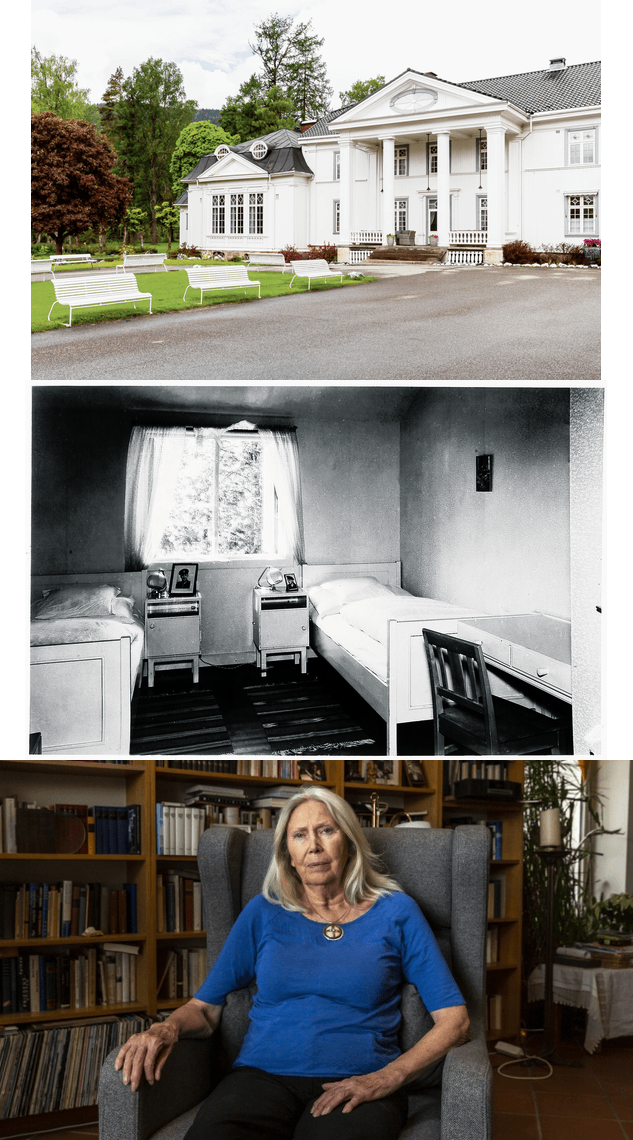
Hier moesten Ariërs geboren worden
Angeniet Berkers verdiepte zich in Lebensborn-huizen. Daar bevielen in WO II veel alleenstaande moeders van kinderen die zij niet mochten houden, maar die wél een toevoeging zouden zijn voor het Arische ras.
Fotoprijs
World Press Photo bekroont ‘piëta’ van de Gaza-oorlog
De World Press Photo van het Jaar toont een treurende Palestijnse vrouw in Gaza, met op schoot het lichaam van haar omgekomen nichtje dat ze omarmt en tegen zich aan klemt. Ook minder actuele foto’s werden bekroond.
In Beeld
Gazanen keren terug naar het verwoeste noorden
Sinds steeds meer Israëlische troepen zich terugtrekken uit het noorden van Gaza, keren veel ontheemde Palestijnen terug naar hun inmiddels verwoeste woonplaats. Op beelden is te zien hoe duizenden mensen met bagage, fietsen en karren over de levensgevaarlijke kustweg naar het noorden van Gaza lopen.
In beeld
De terugkeer van Oleksandr Revtjoech naar het burgerleven
Oleksandr Revtjoech stoot met een rechtse directe in op zijn tegenstander. Acht maanden nadat hij zijn linkerarm en het grootste deel van zijn linkerbeen heeft verloren door mijnontploffingen tijdens gevechten in Oekraïne revalideert hij in de boksring.
Meer In Beeld
Meer
Leven
Column
Sarah Sluimer
Terwijl u dit leest ligt ergens een vrouw op een behandeltafel te huilen van de pijn
Sarah Sluimer
Mijn ouders
‘In 1968 vierden mijn ouders Koninginnedag op de Antillen’
Voor deze rubriek sturen lezers foto’s in van hun ouders. Deze week stuurde Siebe Anne Sonnema (1951) een foto in van Meindert Sonnema (1922-1997) en Jantje Visser (1923-2008), het echtpaar links.
Interview
Luisterlijn
Bij de Luisterlijn hebben ze geleerd: niet te snel reageren. Zelfs niet ‘ja ja’ zeggen
De vrijwilligers van de Luisterlijn luisteren. Naar iedereen die belt, waar het ook over gaat. „Eenzaamheid, dat komt telkens terug, dat is echt beroerd hoor.”
Interview
Klassejustitie
De zoon van Ousmane Dia stierf tijdens de ontgroening. ‘Terwijl Sanda doodging, belden zij de allerbeste advocaten’
Ousmane Dia schreef een boek over zijn zoon Sanda, die stierf na mishandeling tijdens zijn ontgroening. De daders kregen taakstraffen. „Ik ben boos, maar voel geen haat.”
Meer Leven
Meer
Carrière
Dilemma's op de werkvloer
Mag je klagen over je gratis maaltijd?
Je krijgt op kosten van je werkgever een diner tijdens elke avonddienst. Alleen: het is niet te eten, en je vermoedt dat de cateraar het zich zo makkelijk mogelijk heeft gemaakt om zoveel mogelijk te verdienen. Mag je daar wat van zeggen?
Zo werkt dat
Zo word je een vredestichter (op je werk)
Als er iets is waar managers een grote hekel aan hebben, dan is het ruzie in hun team. Jeanne Brett en Stephen Goldberg deden vele decennia onderzoek naar conflicten.
Rubriek
Spitsuur
‘We leven hier erg van dag tot dag’
Bertine van der Velde (44) en Ron Pierlot (52) runnen in de Achterhoek een pleeggezin met drie kinderen. Dat is hard werken; Bertine zegde haar baan op om fulltime voor de kinderen te kunnen zorgen. „Het is zwaar én het is mooi.”
Rubriek
DILEMMA'S OP DE WERKVLOER
Ik wil minder werken vanwege de werkdruk
Je hebt stress op je werk en neemt dat gevoel ook mee naar huis. Kun je zomaar minder gaan werken dan in je contract staat, en is dat ook de beste oplossing?
Meer Carrière
Meer
Tech en Media
TV-RECENSIE
Niet altijd wil Peter Gillis zich voor de camera laten zien
Van je sokkel donderen is nooit plezierig, maar de familie Gillis kan zich er tenminste mee troosten dat ze er überhaupt op eentje hebben gestaan. Voor een van de eerste realitysterrenfamilies, de familie Tokkie, liep dat anders.
Interview
Podcastmaker
Chris Bajema: ‘Op reis gaan is leuker dan ik had gedacht’
In zijn podcast geeft Chris Bajema (52) een wekelijks doorkijkje van zijn verblijf van een jaar in Sheffield met partner Paulien Cornelisse en hun zoon. „Ik zat er helemaal doorheen. Nu is het speelse er weer.”
tv-recensie
De gespeelde Máxima kan de vergelijking met de echte koningin nog niet doorstaan
De langverwachte eerste aflevering van Máxima overtuigt nog niet. Het tempo ligt laag en tegelijkertijd gaat het niet heel diep. In een intrigerende Waalse poltieke thriller is de complexiteit haast weer te groot.
Recensie
Serie
‘Baby Reindeer’ is een briljante en belangrijke serie (●●●●●)
In ‘Baby Reindeer’ wordt een worstelende komiek maandenlang gestalkt. De Netflix-serie van en met Richard Gadd is gebaseerd op zijn eigen ervaringen. Alle trigger warnings van onze tijd komen voorbij, zonder dat het ongeloofwaardig wordt. Beklemmend is het wel.
Meer Tech en Media
Meer
Sport
Doping
Dopingzaak van Chinese zwemmers uit 2021 roept veel vragen op – ‘Ze hadden direct geschorst moeten worden’
Onderzoek van de ARD en The New York Times wijst uit dat 23 Chinese zwemmers begin 2021 positief testten op een hartmedicijn. Straffen bleven uit, de Chinese zwemploeg won later dat jaar in Tokio drie keer olympisch goud. Hoe kon dit gebeuren?
Reportage
Finale KNVB-beker
Als het vuur is gedoofd, maakt Feyenoord de 1-0 en wint de KNVB-beker
In een finale die werd ontsierd door vuurwerk en onderbrekingen versloeg Feyenoord in de eigen Kuip NEC met 1-0.
Toerskiën
In het pikkedonker door de 'Tiefschnee' en langs afgronden – dit is de Patrouille des Glaciers
Hoe is het om mee te doen aan de zwaarste toerskiwedstrijd ter wereld, in de bergen van Zwitserland? Het parcours van de Patrouille des Glaciers (4.400 hoogtemeters) door de ogen van zesvoudig deelnemer Frits Vrijlandt.
Luik-Bastenaken-Luik
De vrouwenkoers eerst of gaan de mannen voor?
Wanneer gaat het vrouwenpeloton van start bij een klassieker? Met de groeiende populariteit van het wielrennen voor vrouwen wordt die vraag steeds belangrijker.
Meer Sport
Meer
Ondertussen
Design
Openbare toiletpaleizen in Tokio spelen hoofdrol in Wim Wenders film ‘Perfect Days’
Prominent figureren ze in Wim Wenders’ nieuwe film: Tokio’s 17 openbare designtoiletten, ontworpen door toparchitecten.
Ikje
Verf
Mijn niet-Nederlandse bijleskind van 8 probeer ik uit te leggen waarom taal zo belangrijk is. Later op school krijgt hij ook rekensommen, met opdrachten als: „De schilder moet…
Column
Marjoleine de Vos
Wat je zegt is de waarheid
Feiten, ook wetenschappelijke, zijn wat we feiten noemen, heeft Trudy Dehue meer dan eens uitgelegd. We beweren bijvoorbeeld rustig dat bij onderzoek bepaalde gebieden in de…

:format(webp)/s3/static.nrc.nl/images/gn4/stripped/data114680338-2d5ffc.jpg)
:format(webp)/s3/static.nrc.nl/bvhw/files/2024/04/data114652394-a8eef2.jpg)
/s3/static.nrc.nl/images/gn4/stripped/data114676080-4df708.jpg)
/s3/static.nrc.nl/images/gn4/stripped/data114676206-d0b5da.jpg)
/s3/static.nrc.nl/images/gn4/stripped/data114677385-86f847.jpg)
/s3/static.nrc.nl/hpe/a90c853-web-2304BUI_oekrainedienstplicht.jpg)
/s3/static.nrc.nl/wp-content/uploads/2024/04/web-2304buizkorea.jpg)
/s3/static.nrc.nl/images/gn4/stripped/data114678651-f324bb.jpg)
/s3/static.nrc.nl/wp-content/uploads/2024/04/web-2304bindiscriminatie.jpg)
/s3/static.nrc.nl/wp-content/uploads/2024/04/web-2404binduuraam1.jpg)
/s3/static.nrc.nl/wp-content/uploads/2024/04/anp-483418810.jpg)
/s3/static.nrc.nl/wp-content/uploads/2024/04/anp-482835372.jpg)
/s3/static.nrc.nl/images/gn4/stripped/data114660604-e745df.jpg)
/s3/static.nrc.nl/wp-content/uploads/2024/04/web-2404buibootmigrant.jpg)
/s3/static.nrc.nl/wp-content/uploads/2024/04/web-2404binmazelen.jpg)
/s3/static.nrc.nl/bvhw/files/2024/04/data114652932-17b606.jpg)
/s3/static.nrc.nl/wp-content/uploads/2024/04/anp-496665011.jpg)
/s3/static.nrc.nl/wp-content/uploads/2024/04/web-2204buiduitslandchina02.jpg)
/s3/static.nrc.nl/images/gn4/stripped/data114676206-d0b5da.jpg)
/s3/static.nrc.nl/images/gn4/stripped/data114676080-4df708.jpg)
:format(jpeg):fill(f8f8f8,true)/s3/static.nrc.nl/hpe/825dae7-Koning%252C%2520Petra%2520de%2520Doomernik%25201280%25202%2520WEB.png)
/s3/static.nrc.nl/bvhw/files/2024/04/data114652394-a8eef2.jpg)
/s3/static.nrc.nl/wp-content/uploads/2024/04/22162030/data114517142-cc6a95.jpg)
/s3/static.nrc.nl/images/gn4/stripped/data114598574-2b2b46.jpg)
/s3/static.nrc.nl/images/gn4/stripped/data114648162-2d35ee.jpg)
/s3/static.nrc.nl/wp-content/uploads/2024/04/22142045/web-2304CULLEV_ShirtPeter2.jpg)
/s3/static.nrc.nl/wp-content/uploads/2024/04/22162030/data114517142-cc6a95.jpg)
/s3/static.nrc.nl/images/gn4/stripped/data114651965-950daf.jpg)
/s3/static.nrc.nl/bvhw/files/2023/04/koningsdag.jpg)
/s3/static.nrc.nl/bvhw/files/2023/01/versus.jpeg)
/s3/static.nrc.nl/bvhw/files/2023/02/web-1004culripley2.jpg)
/s3/static.nrc.nl/hpe/825dae7-Koning%252C%2520Petra%2520de%2520Doomernik%25201280%25202%2520WEB.png)
/s3/static.nrc.nl/bvhw/wp-content/blogs.dir/114/files/2023/05/meijer-eva-032023-261280-homepage.png)
:format(jpeg):fill(f8f8f8,true)/s3/static.nrc.nl/taxonomy/bf9b707-commentaar-itemafbeelding-2024.png)

/s3/static.nrc.nl/wp-content/uploads/2024/04/19165119/web-NC-2004ZATnws_Kharkiv_vrienden.jpg)
/s3/static.nrc.nl/wp-content/uploads/2024/04/19130401/data114427534-15d3a9.jpg)
/s3/static.nrc.nl/images/gn4/stripped/data114677541-1c054c.jpg)
/s3/static.nrc.nl/wp-content/uploads/2024/04/web-2304bindiscriminatie.jpg)
/s3/static.nrc.nl/wp-content/uploads/2024/04/web-2404binduuraam1.jpg)
/s3/static.nrc.nl/wp-content/uploads/2024/04/web-2204binwarmtenet.jpg)
/s3/static.nrc.nl/hpe/87114a4-web-2004BINPVDANIEUW.jpg)
/s3/static.nrc.nl/images/gn4/stripped/data114534727-9549a6.jpg)
/s3/static.nrc.nl/wp-content/uploads/2024/04/19144841/data114473110-d9e10d.jpg)
/s3/static.nrc.nl/images/gn4/stripped/data114647495-f098a2.jpg)
/s3/static.nrc.nl/images/gn4/stripped/data114644631-611a87.jpg)
/s3/static.nrc.nl/images/gn4/stripped/data114645760-8d59e4.jpg)
/s3/static.nrc.nl/images/gn4/stripped/data114644814-be81c8.jpg)
/s3/static.nrc.nl/images/gn4/stripped/data114651845-21b437.jpg)
/s3/static.nrc.nl/images/gn4/stripped/data114645828-5d4762.jpg)
/s3/static.nrc.nl/images/gn4/stripped/data114651191-a0b73c.jpg)
:format(jpeg):fill(f8f8f8,true)/s3/static.nrc.nl/images/gn4/data114437478-909585.png)
/s3/static.nrc.nl/images/gn4/stripped/data114474048-d4dc46.jpg)
/s3/static.nrc.nl/bvhw/files/2024/04/data114596540-ccd082.jpg)
/s3/static.nrc.nl/images/gn4/stripped/data114385952-e0aeff.jpg)
/s3/static.nrc.nl/bvhw/files/2024/04/data114680638-107bd9.jpg)
/s3/static.nrc.nl/images/gn4/stripped/data114381712-94e5ae.jpg)
/s3/static.nrc.nl/images/gn4/stripped/data114643111-497250.jpg)
/s3/static.nrc.nl/images/gn4/stripped/data114639006-ec27d6.jpg)
/s3/static.nrc.nl/wp-content/uploads/2024/04/18103842/Copy-of-Copy-of-Homepage-gifje-met-fade.jpg)
/s3/static.nrc.nl/inbeeld/files/2024/04/web-inbeeldgazareturn11.jpg)
/s3/static.nrc.nl/inbeeld/files/2024/04/1104ingukraineamputees11.jpg)
/s3/static.nrc.nl/taxonomy/5e08f1d-Sluimer%252C%2520Sarah%252004_2023%252011_1280%2520%2528homepage%2529.png)
/s3/static.nrc.nl/bvhw/files/2024/04/data114644031-9e8b31.jpg)
/s3/static.nrc.nl/wp-content/uploads/2024/04/18155110/web-2004ZATlevLuisterlijn2.jpg)
/s3/static.nrc.nl/wp-content/uploads/2024/04/16102142/data114190729-503d74.jpg)
/s3/static.nrc.nl/wp-content/uploads/2024/04/22104011/web-2204ECO_dilemma_KRAAKMAN.jpg)
/s3/static.nrc.nl/bvhw/files/2024/04/data114519270-f0eef7.jpg)
/s3/static.nrc.nl/images/gn4/stripped/data114479181-0de2bf.jpg)
/s3/static.nrc.nl/wp-content/uploads/2024/04/14184621/data114224455-da6bc1.jpg)
/s3/static.nrc.nl/images/gn4/stripped/data114674470-77056e.jpg)
/s3/static.nrc.nl/images/gn4/stripped/data114517208-345db4.jpg)
/s3/static.nrc.nl/images/gn4/stripped/data114641000-dd6b99.jpg)
/s3/static.nrc.nl/images/gn4/stripped/data114484809-139793.jpg)
/s3/static.nrc.nl/images/gn4/stripped/data114645735-0554c4.jpg)
/s3/static.nrc.nl/images/gn4/stripped/data114617533-1b88eb.jpg)

/s3/static.nrc.nl/images/gn4/stripped/data114520628-00178b.jpg)
/s3/static.nrc.nl/bvhw/files/2024/04/web-2304achtokyo4.jpg)
:format(jpeg):fill(f8f8f8,true)/s3/static.nrc.nl/bvhw/wp-content/blogs.dir/114/files/2019/07/ikje5bij3-1.png)
/s3/static.nrc.nl/bvhw/wp-content/blogs.dir/114/files/2019/01/vos-marjoleine-de-online-homepage.png)