Sluit menu
Binnenland
Buitenland
Economie
Den Haag
Cultuur
Wetenschap
Sport
Opinie
Columnisten
Tech en Media
Boeken
Leven
Slim leven
In Beeld
Carrière
Klimaat
Recht
Podcast
Archief
Luister naar
Commentaar
Ombudsman
Puzzels
Magazine
Service
Webwinkel
Familieberichten
Over NRC
Service
Bezorgservice
Onderbrekingsservice
Verhuisservice
Mijn gegevens
Mijn abonnementen
FAQ Digitaal Lezen
Nieuwsbrieven
Veelgestelde vragen
Mijn leeslijst
Digitale krant
Wachtwoord vergeten
Menu
NRC
Abonneren
Mijn nieuws
Podcasts
Digitale krant
Puzzels
Mijn NRC
Terug
Lees meer
Inloggen
Neem een abonnement
Mijn nieuws
Mijn leeslijst
Mijn geschiedenis
Digitale krant
Nieuwsbrieven
Onderwerpen
Ik ben abonnee
Neem een abonnement
Instellingen
Weergaveopties
Uitloggen
Hoe kunt u ons bereiken?
Vanwege het coronavirus werken onze medewerkers thuis.
Service
Privacy-instellingen
Notificaties
Lichte weergave
Donkere weergave
Volg instellingen van mijn apparaat
Bezorgservice
Vakantieservice
Verhuisservice
Mijn gegevens
Mijn abonnementen
Abonnement delen
Gedeeld abonnement
FAQ Digitaal Lezen
Veelgestelde vragen
Wachtwoord vergeten
Mijn nieuws
Binnenland
Buitenland
Economie
Den Haag
Cultuur
Wetenschap
Opinie
Boeken
Leven
Carrière
Webwinkel
Puzzels
Al abonnee?
Inloggen
Vandaag
Hongarije
Wie de verkiezingen wint moet ‘verantwoordelijkheid tonen’, zegt Wilders op radicaal-rechts congres, dus hij houdt zich in
Zijn formatiepartners waren „heel benieuwd” naar Wilders’ toespraak op het ultraconservatieve congres in Hongarije. De PVV-leider hield zich in: hij wil dat de formatie slaagt, zegt hij.
Mirage
De redder van Blokker en Intertoys? ‘Echt níémand had er vertrouwen in dat dit nog goed zou komen’
Vijf jaar geleden nam investeerder Michiel Witteveen de noodlijdende winkelketens over van de familie Blokker. Een terugblik op een turbulente tijd, met lege schappen, hoge schulden en een levensgroot portret van David Bowie.
Reportage
Chinese invloed
Salomonseilanden zijn China’s sleutel tot de Pacific: ‘We zijn een slaaf van de grootmachten’
Op de Salomonseilanden, een arme maar strategisch gelegen eilandengroep in de Stille Oceaan, groeit de Chinese invloed. De onvrede hierover leidde tot rellen. ‘Tegenwoordig is het overal Chinatown.’
Bewindspersonen
Kabinet wil adviescommissie die carrièrestappen oud-bewindslieden toetst op belangenverstrengeling
De adviescommissie zou drie oordelen kunnen vellen over een vervolgstap van een oud-bewindspersoon: ‘geen bezwaar’, ‘aanvaardbaar onder nadere voorwaarden’ of ‘onaanvaardbaar wegens (een te groot risico op) belangenverstrengeling’.
Europese Verkiezingen
Europese VVD-lijsttrekker krijgt kritische vragen over de formatie in Nederland
Voor Malik Azmani, de lijsttrekker van de VVD voor de Europese Verkiezingen, staat de campagne voor 6 juni vooralsnog in het teken van tekst en uitleg geven over de kabinetsformatie in Nederland.
Laatste nieuws
Meer
Analyse
Bestuurscrisis
Terugkeer Alex Kroes laat zien wie de baas is bij Ajax
Corruptie Rusland
‘Poetin geeft signaal af aan zijn kliek: kijk uit hoeveel je steelt’
El Niño
Aanhoudende regen teistert Tanzania, overstromingen kosten al zeker 155 mensen het leven
Corruptie
Oekraïense minister van Landbouw gearresteerd vanwege gesjoemel met grondrechten
Dierenziekte
Vaccin tegen blauwtongvirus versneld goedgekeurd door ministerie van Landbouw
Toerisme
Japans stadje plaatst scherm voor uitzicht op de berg Fuji na toeristenoverlast
CVC Capital Partners
Aandeel eigenaar Douglas en Lipton stijgt bijna kwart na beursdebuut
Ziekte
Dieuwertje Blok moet neusamputatie ondergaan vanwege kanker en stopt met tv
Antisemitisme
Tweede Kamer wil landelijke dag tegen antisemitisme op 25 april
Deepfake
Vijftien aangiftes tegen verspreiding deepfakeporno BN’ers, video’s verwijderd van website
Meest gelezen
Mirage
De redder van Blokker en Intertoys? ‘Echt níémand had er vertrouwen in dat dit nog goed zou komen’
Hongarije
Wie de verkiezingen wint moet ‘verantwoordelijkheid tonen’, zegt Wilders op radicaal-rechts congres, dus hij houdt zich in
Lintjesregen
Benieuwd wie allemaal een lintje hebben gekregen? Zoek op achternaam, locatie, jaar, geslacht en soort onderscheiding
Gaza-oorlog
Hoe Israëlische soldaten met hun selfies de tegenstander niet meer als mens zien
Column
Youp
Mazzelen
Meer nieuws
Niet te missen
Reportage
Zelfverdediging
‘Boksende zakenman’ (v) leert jonge vrouwen in Nairobi zichzelf te verdedigen
In een boksschool in een arme wijk van de Keniase hoofdstad Nairobi leren jonge vrouwen van zich af te slaan. „Mannen zijn bang voor me geworden.”
Column
Maak geen onderscheid tussen onrecht
De manier waarop Kamerleden over biculturele Nederlanders, moslims, niet-westerse allochtonen, migranten en vluchtelingen spreken, is onbeschaamd en bloedstollend.
Lintjesregen
Benieuwd wie allemaal een lintje hebben gekregen? Zoek op achternaam, locatie, jaar, geslacht en soort onderscheiding
Vandaag krijgen ruim drieduizend mensen een koninklijke onderscheiding, onder wie talloze vrijwilligers, tv-presentatrice Yvon Jaspers, oud-museumdirecteur Sjarel Ex, en medeoprichter van de eerste Nederlandse internetprovider Frances Brazier. Waarom wordt de één wel, en de ander niet onderscheiden?
Opinie
Gaza-protesten
Als het over Gaza gaat, is de universiteitsbestuurder ineens niet meer zo sociaal rechtvaardig
Om de woede over de Israëlische aanvallen te onderdrukken sluiten universiteitsbestuurders gebouwen, vragen ze de politie om studenten te arresteren en delen zij schorsingen uit. Dat is onterecht vindt Pepijn Brandon.
Jeugdtheater
Van diep in het bos naar de verste uithoeken van het heelal in jeugdtheater tijdens de meivakantie
In de meivakantie bieden verschillende theatermakers fantasierijke werelden voor een jong publiek aan. NRC licht er drie uit.
Boeken
Interview
Michal Citroen over Joodse onderduikers: ‘De klap kon op elk moment komen’
In Een adres verzamelde journalist Michal Citroen aangrijpende verhalen van Joodse onderduikers. „Laat niemand ooit meer denken dat Joden zelf schuld hadden.”
Recensie
Koloniale geschiedenis
Alfred Birney: als Indo is hij nergens thuis
In zijn nieuwe boek met artikelen en brieven laat Alfred Birney zien dat er nog altijd een schrijnend gebrek bestaat aan historische kennis van het voormalige Nederlands-Indië.
Recensie
Maatschappijkritiek
Waarom onze obsessie met het hyper-persoonlijke alleen maar tot onmacht leidt
De provocatieve literatuurwetenschapper Anna Kornbluh neemt in Immediacy de hedendaagse cultuur onder vuur, die zwelgt in directe ervaringen. Voor een waardevol kritisch perspectief zijn bedachtzaamheid en reflectie onontbeerlijk.
Meer
Meer
Opinie & Columns
Tv-recensie
Conductrice Jinek, met blaffer, laat niet met zich sollen: ‘Go ahead punk, make my day’
Met een goede greep uit het nieuws heb je weinig nodig om er het absurde van te tonen. Zo stelde Eva Jinek niet teleur bij het satirische programma ‘Dit was het nieuws’.
Opinie
Kapitalisme
Fans van Taylor Swift laten hun hart graag spreken via hun bankpas
Popster Taylor Swift bereikte begin deze maand het miljardairschap. Zo staat ze symbool voor hoe ongelijk de muziekindustrie is geworden, schrijft Annelot Prins.
Opinie
Asielbeleid
De asielcrisis is een politiek maaksel van de PVV en VVD
Formerende partijen praten niet over echte problemen: huisvesting, arbeid en armoede. Er is geen asielcrisis maar een morele crisis, die politiek geweld koppelt aan onverschilligheid meent Galina Cornelisse.
Meer Opinie & Debat
Meer
Beste van NRC
Gaza-oorlog
Hoe Israëlische soldaten met hun selfies de tegenstander niet meer als mens zien
Israëlische militairen tonen op sociale media vrijelijk het soms buitensporige geweld dat ze plegen in Gaza.
Belastingen
Hoe chemiebedrijf OCI zijn aandeelhouders miljarden uitkeert en de fiscus met lege handen achterblijft
Chemieconcern OCI betaalt 5 miljard euro aan zijn aandeelhouders – belastingvrij, via handig gebruik van de wet. Nederland loopt zo 750 miljoen euro dividendbelasting mis.
Voetbalshirts
En toen bleek mijn Arsenal-shirt uit ’95 nep
NRC-redacteur en voetbalshirtverzamelaar Peter Zantingh dacht een echte Dennis Bergkamp te hebben gescoord. Waarom was het zo erg dat hij werd opgelicht – en had hij beter kunnen weten?
Europese verkiezingen
Op wie kan je stemmen bij de Europese verkiezingen 2024?
Op 6 juni kiest Nederland 31 Europarlementariërs. Wie zijn de kandidaten? NRC zet de lijsttrekkers voor u op een rij.
Meer Beste van NRC
Meer
De meest recente podcasts
Podcast Oorlog
Waarom Israëlische militairen vernederende TikTok-video’s uit Gaza delen
Podcast
Waarom hebben mensen geen winterslaap?
Podcast
Perfectionisten kampen met een imagoprobleem
Podcast
Het weglopen van Wilders: crisis of theater?
Podcast
Hoogleraar sociologie Hein de Haas over het doorprikken van migratiemythes
Podcast
Aflevering 8: Conclusies
Podcast
Aflevering 8: Hoe een samenleving de Zwarte Dood overleeft
Meer
Meer
Mijn nieuws
Meer artikelen
Meer
Binnenland
Column
Floor Rusman
Na regen komt nog meer regen
Floor Rusman citeert collega-columnist Janan Ganesh. Ze is het niet helemaal met hem eens, want spreuken zijn mooi, maar uiteindelijk hangt je geluk van veel meer af dan een enkele beslissing.
Antisemitisme
Tweede Kamer wil landelijke dag tegen antisemitisme op 25 april
Elk jaar rond die datum moet de Tweede Kamer ook een plenair debat voeren over antisemitisme. Het kabinet wil daarnaast een sessie organiseren met Joodse en andere organisaties om te praten over het toenemend antisemitisme in Nederland.
Dierenziekte
Vaccin tegen blauwtongvirus versneld goedgekeurd door ministerie van Landbouw
Vrijdag is een vaccin goedgekeurd tegen het blauwtongvirus, een hardnekkige dierenziekte die onder schapen en runderen afgelopen jaren in de zomer oplaaide. Het ministerie hoopt een nieuwe uitbraak voor te zijn.
Meer Binnenland
Meer
Politiek Den Haag
Volg
Politiek Den Haag
Antisemitisme
Na ‘explosie van antisemitische incidenten' wil de Kamer concrete actie
In de Kamer klonken veel ideeën en voorstellen om antisemitisme beter te kunnen bestrijden. Wat het kabinet voorstelt, is niet genoeg, vinden de meeste fracties. „We zeiden allemaal: nooit meer, en dat is ook nu”.
Kamerdebat
Van de toeslagen is de politiek en de burger nog lang niet af
Dat er iets moet gebeuren aan het systeem van toeslagen, daar is de Kamer het over eens. Maar hoe dat kan, dat is nog de vraag.
Interview
Kajsa Ollongren
|
Minister van Defensie
Ollongren: Poetins grens stopt niet bij de NAVO-grens
Als demissionair minister van Defensie probeert Kajsa Ollongren (D66) Nederland te doordringen van het gevaar dat Poetin vertegenwoordigt. „We hebben altijd gezegd: Oekraïne zal niet het laatste, maar het éérste land zijn dat wordt aangevallen.”
Analyse
Coalitievorming
De politieke oplossingen liggen niet langer in het midden
Voorkeuren van de VVD-kiezers maken het voor die partij haast onmogelijk om níet ‘over rechts’ te formeren. De PVV wordt steeds meer acceptabel.
Meer Den Haag
Meer
Buitenland
Interview
Rafael Grossi
|
Directeur Internationaal Atoomenergie Agentschap
Atoomwaakhond van de VN waarschuwt: ‘Helaas zijn kernwapens weer aantrekkelijker geworden’
Met een kerncentrale in Oekraïens oorlogsgebied, nucleaire dreigementen uit Moskou en een crisis tussen Israël en Iran heeft Rafael Grossi zijn handen vol. „Ik zal me nooit gerust voelen over Zaporizja totdat dit allemaal voorbij is.”
Reportage
CPAC Hungary
‘De harnassen moeten aan’, klinkt het op Wilders’ ultrarechtse feestje in Boedapest
Geert Wilders spreekt vrijdag in Boedapest op CPAC. De eerste conferentiedag was een kruisbestuiving van gevestigde namen en alarmistische influencers. Journalisten waren niet welkom.
Reportage
Italië
Dagje in ‘pretpark’ Venetië? Dat is dan 5 euro
Venetië vraagt toeristen sinds donderdag op de drukste dagen een toegangskaartje te betalen, een wereldprimeur. Reacties lopen sterk uiteen. „Het voelt een beetje bizar, maar ergens snap ik het.”
Profiel
Sadiq Khan
Burgemeester Sadiq Khan van Londen ligt voortdurend onder vuur – van extreem-rechts én -links
Sadiq Khan (53) wil komende donderdag, 2 mei, worden herkozen voor een derde termijn als burgemeester van Londen. Hij geldt als zeer betrokken, maar heeft hij ook zaken tot stand gebracht?
Meer Buitenland
Meer
Economie
Wet betaalbare huur
De Wet betaalbare huur van minister De Jonge komt er dan eindelijk
De huurwet van Hugo de Jonge, die donderdag door de Kamer kwam, is een belangrijke politieke overwinning voor de minister.
Interview
Mariana Mazzucato
Topeconoom Mazzucato: ‘We moeten stoppen de overheid dom te houden’
Hoe laat je bedrijven bijdragen aan maatschappelijke oplossingen? Niet door als overheid gemakkelijk geld uit te delen, zonder daar harde eisen aan te verbinden, zegt topeconoom Mariana Mazzucato. Maar dan moeten overheden wel beter toegerust worden „om alle bullshit eruit te zeven”.
Interview
Mantelzorgers
Opeens waren Mariam (26) en Kadi (22) mantelzorger voor hun moeder. ‘Ik moet nu ook weer voor mezelf gaan zorgen’
Eén op de vier jongeren is mantelzorger. Hoe is het om je eigen studie te moeten onderbreken om te mantelzorgen of elke dag na school voor een familielid te moeten zorgen?
Meer Economie
Meer
Wetenschap
Chemische stoffen
Hoe schadelijk zijn chemische stoffen? De Gezondheidsraad wil meer zicht op de gevolgen van de blootstelling eraan
De Gezondheidsraad wil dat de blootstelling van mensen aan chemische stoffen beter wordt gemeten. Dat gebeurt nu te weinig.
In beeld
Reuzenslang herrijst uit de Indiase mythologie
Wekelijks een opmerkelijk beeld van een wetenschappelijke gebeurtenis. Deze week: een slang die wel vijftien meter lang kon worden.
Column
Peter Kuipers Munneke
Satellieten als scherprechters voor milieu en klimaat
Dankzij satellieten kunnen we steeds beter zien wat zich op aarde afspeelt, schrijft Peter Kuipers Munneke. Niets schimmigs blijft verborgen.
Jong geleerd
‘Een sociale robot hoeft er niet uit te zien als een mens’
Sociale robots zijn bedoeld om contact te maken met mensen. Hoe zorg je dan dat zo’n robot subtiel menselijk gedrag onder de knie krijgt? „Het interpreteren van elkaars blik is heel belangrijk.”
Meer Wetenschap
Meer
Cultuur
Interview
St. Vincent
St. Vincent: ‘Ik ben geen fetisjist, maar pijn hoort erbij’
Zangeres Annie Clark (beter bekend als St. Vincent) weigert te wedijveren met het algoritme. „Jullie zien maar twee procent van wat ik maak.”
Recensie
Albums van de week
Justice blijft vertrouwd doordansen - een luisteravontuur met Frederick Delius
Justice weet precies wat ze willen, en hoe dat moet klinken. Gewoon drama is niet genoeg: ze maken hyperdrama. Drama hoor je ook bij de muziek van Frederick Delius, die een verhaal van James Elrocy Flecker op muziek zette. Oriëntalisme, zeker, maar tóch genieten.
Interview
José Maria Capricorne
Curaçaose kunstenaar José Maria Capricone (91): ‘Ik vond de kleuren in Nederland maar wat triest’
In het Stedelijk Museum Breda is het omvangrijke en kleurrijke oeuvre van José Maria Capricorne (91) te zien. „Als je in Nederland geboren en getogen bent, dan kijk je anders naar kleur dan iemand die in de tropen is geboren.”
Recensie
Eigentijds circus
De nieuwe mensensoort is sterk en elastisch, toont Circa in ‘Humans 2.0’
In ‘Humans 2.0’ van het Australische circusgezelschap Circa tarten de acrobaten op verbluffende wijze de wetten van de zwaartekracht. Ze zijn begin mei te zien op Festival Circusstad in Rotterdam.
In Beeld
In beeld
Meerkoeten in Amsterdam: dobberend in een oranje polonaise
De Amsterdamse grachten zijn op Koningsdag één groot varend feest. Voor de vele meerkoeten die er hun nest hebben is het juist een rampdag. Fotograaf Theo Bosboom legde ze vast, te midden van de extreme drukte.
in beeld
Athene kleurt knaloranje door Saharastof
Een natuurverschijnsel dat net zo ongebruikelijk als indrukwekkend is: het zuiden van Griekenland leek dinsdag bedekt door een dikke, geeloranje deken. Stofwolken uit de Sahara waaiden deze dinsdag over de Middellandse Zee en bedekten Athene en andere Griekse steden.
In Beeld
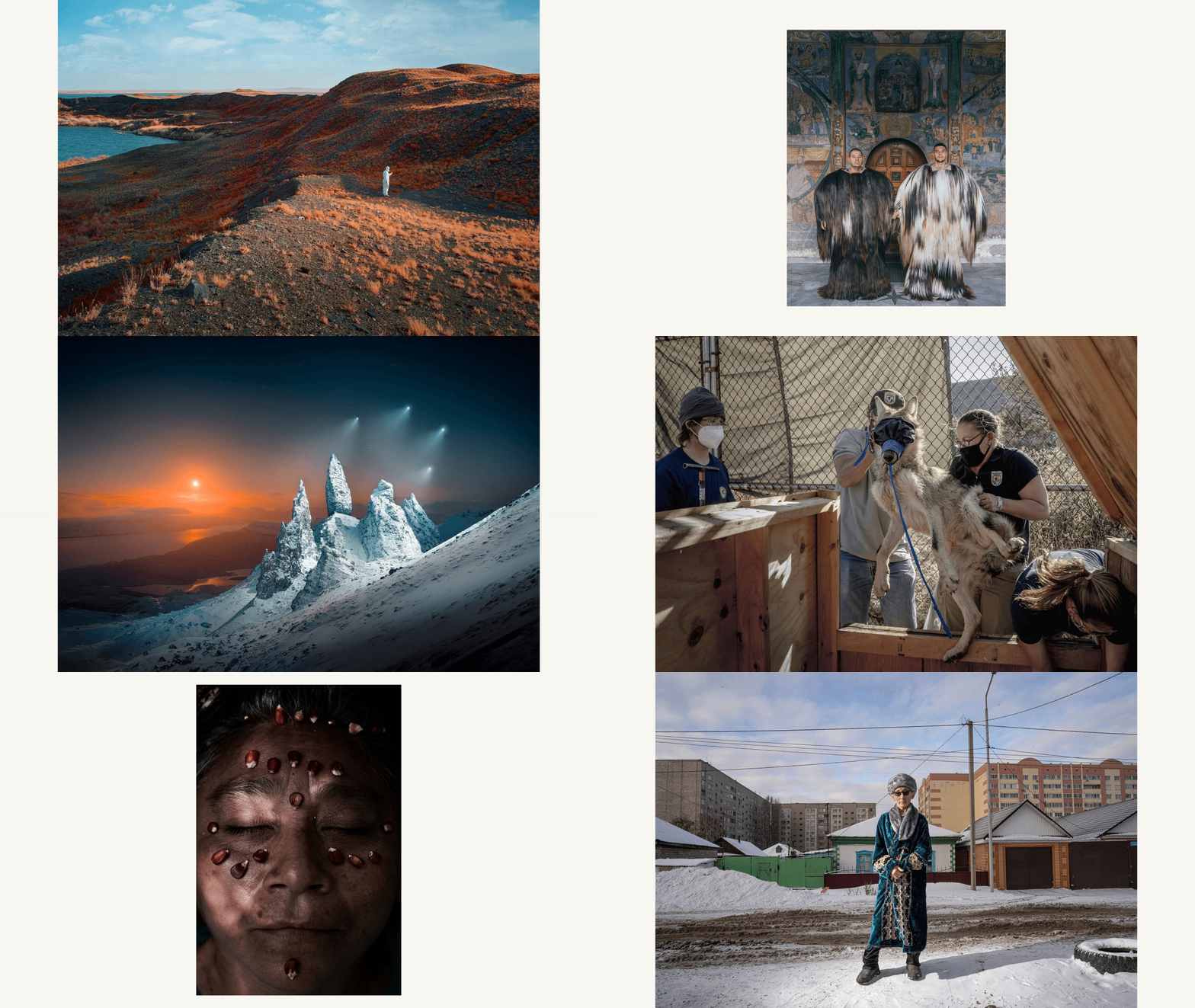
Spectaculaire landschappen en indringende portretten
De Nederlander Eddo Hartman ontving bij de Sony World Photography Awards de prijs voor de categorie landschappen. Een overzicht van alle winnaars.
In beeld
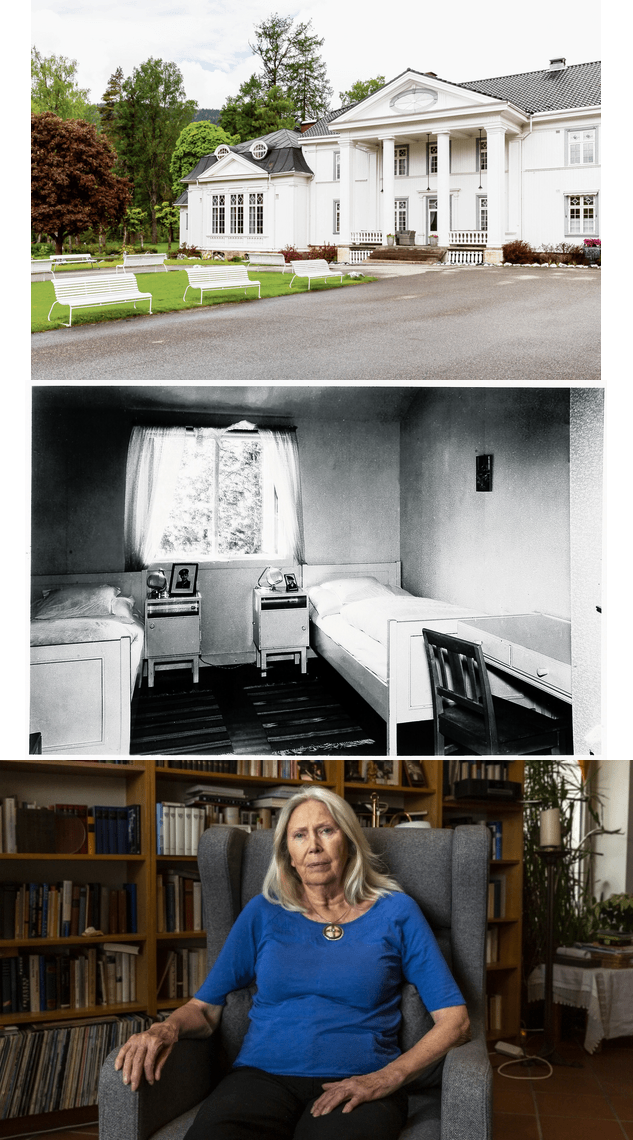
Hier moesten Ariërs geboren worden
Angeniet Berkers verdiepte zich in Lebensborn-huizen. Daar bevielen in WO II veel alleenstaande moeders van kinderen die zij niet mochten houden, maar die wél een toevoeging zouden zijn voor het Arische ras.
Meer In Beeld
Meer
Leven
Wat was ie lekker
‘Voorbereiden van zo’n gerecht is bijna zen’
Tofu, broccoli en paddenstoelen uit de wok
Janneke kookt
De Spaanse kapsalon
Voor Koningsdag dit jaar slappe frieten als goede bodem om op te drinken. En waarschijnlijk heeft u er alles al voor in huis, schrijft Janneke Vreugdenhil.
Interview
Lunchen met
Dirigent Elim Chan: ‘Als ik het niet weet, denk ik: wat zou Haitink doen?’
Elim Chan, tot mei chef-dirigent van het Antwerp Symphony Orchestra, wil de muziek laten vertellen wat haar lichaam moet doen, géén gebaren instuderen. Het is „een risico” om het zo te doen, maar; „Ik probeer het.”
Toekomst van wonen
Wonen in Nederland: eenheidsworst. Dat het anders kan, zie je hier
Niet in een rijtjeshuis of appartement wonen, maar experimenteler? Dat kan, maar je moet wel een flinke dosis tijd, geduld en doorzettingsvermogen hebben.
Meer Leven
Meer
Carrière
Spitsuur
‘In ons leven zit nu meer regelmaat’
Eigenlijk willen Jos en Willemijn Hummelen-van der Veen in Afrika wonen en werken, maar zoon Anne heeft in Nederland medische zorg nodig. „We delen een hang naar ‘iets doen’ voor de wereld en willen onze horizon verbreden.”
Dilemma's op de werkvloer
Mag je klagen over je gratis maaltijd?
Je krijgt op kosten van je werkgever een diner tijdens elke avonddienst. Alleen: het is niet te eten, en je vermoedt dat de cateraar het zich zo makkelijk mogelijk heeft gemaakt om zoveel mogelijk te verdienen. Mag je daar wat van zeggen?
Zo werkt dat
Zo word je een vredestichter (op je werk)
Als er iets is waar managers een grote hekel aan hebben, dan is het ruzie in hun team. Jeanne Brett en Stephen Goldberg deden vele decennia onderzoek naar conflicten.
Rubriek
Spitsuur
‘We leven hier erg van dag tot dag’
Bertine van der Velde (44) en Ron Pierlot (52) runnen in de Achterhoek een pleeggezin met drie kinderen. Dat is hard werken; Bertine zegde haar baan op om fulltime voor de kinderen te kunnen zorgen. „Het is zwaar én het is mooi.”
Meer Carrière
Meer
Tech en Media
Ziekte
Dieuwertje Blok moet neusamputatie ondergaan vanwege kanker en stopt met tv
Blok legt haar werkzaamheden voorlopig neer. „Ik zal alleen geen tv doen. Waarschijnlijk nooit meer,” zegt ze tegen de Volkskrant. „Hopelijk kan ik wel weer radio gaan doen.”
Recensie
De Podcastclub
Hoe je verder moet zonder geheugen hoor je in deze podcast
Anna Vossers is duidelijk gefascineerd door de podcast over het geheugenverlies van Jur. Maar toch blijft er iets schuren.
Recensie
De Podcastclub
Zo fileer je een boek met verborgen verderfelijke boodschappen
Anna Vossers luistert naar een podcast waarin een journalist en een jurist zelfhulpboeken fileren en pseudowetenschap tegen het licht houden. Het resultaat is fascinerend.
Tv-recensie
Jeroen Pauw verricht geen wonderen bij minister Yesilgöz
Wonderen kun je niet afdwingen. Maar je kunt wel iets bespreekbaar maken door er een vraag over te stellen. Jeroen Pauw vroeg niet naar de waarheid en dus kwam de minister van Justitie goed weg. Ondertussen gaat de zoektocht naar een goddelijke ingreep in Lourdes door.
Meer Tech en Media
Meer
Sport
Analyse
Bestuurscrisis
Terugkeer Alex Kroes laat zien wie de baas is bij Ajax
De terugkeer van Alex Kroes laat zien hoever de invloed van de vereniging Ajax doorwerkt in de proftak, zeker als de prestaties van het eerste elftal tegenvallen.
Interview
Schoonspringen
Schoonspringers Inge Jansen en Celine van Duijn zijn topsporter af na mislopen olympisch startbewijs: ‘Die trainingen, dat was het meest afzien’
Inge Jansen en Celine van Duijn wilden nog één keer naar de Olympische Spelen, nu als duo. Dat lukte niet. Ze blikken terug op hun carrière, de mooiste en moeilijkste momenten.
Profiel
Tennis
Hoe vecht Botic van de Zandschulp zich terug naar de top?
Op het Spaanse gravel probeert tennisser Botic van de Zandschulp (28) na een moeilijk jaar zijn vorm terug te vinden. „Zelfvertrouwen is niet te koop bij de HEMA.”
Column
Marijn de Vries
Is Jutta Leerdam een diva of gewoon sterk?
Ik ben dat paternalisme soms zo zat. Daarmee doel ik niet direct op Sven Kramer, die voelt zich gewoon op zijn edele delen getrapt omdat hij heeft verloren. Nee, ik bedoel de paternalistische teneur in het algemeen. De teneur van ‘doe dat toch niet, meisje’.
Meer Sport
Meer
Ondertussen
Column
Youp
Mazzelen
In Parijs zijn de wieken van de Moulin Rouge afgebroken, in Londen sloegen de paarden van het Britse Koningshuis op hol en in Amsterdam was ik dinsdagavond sprakeloos in mijn…
Ikje
Korte broek
Terwijl ik in de schoolpauze door de stad loop, komt een jongen naar mij toe fietsen op een fatbike. „Waarom draag jij een korte broek”, vraagt hij.
Ikje
Goede manieren
Mijn dochter en schoonzoon zijn de trotse ouders van een bijna tweejarige zoon. Het opvoeden is een beetje begonnen en tot hun vreugde werpt dat vaak goede vruchten af.

:format(webp)/s3/static.nrc.nl/images/gn4/stripped/data114821740-357535.jpg)
:format(webp)/s3/static.nrc.nl/wp-content/uploads/2024/04/24123724/data114712988-64349f.jpg)
/s3/static.nrc.nl/images/gn4/stripped/data114724366-b1059b.jpg)
/s3/static.nrc.nl/wp-content/uploads/2024/04/web-2604bincoravannieuwenhuizen.jpg)
/s3/static.nrc.nl/hpe/91a70ae-web-2604BUI_Azmani.jpg)
/s3/static.nrc.nl/images/gn4/stripped/data114818149-c42823.jpg)
/s3/static.nrc.nl/images/gn4/stripped/data114815643-f03839.jpg)
/s3/static.nrc.nl/wp-content/uploads/2024/04/web-2604buitanzania4.jpg)
/s3/static.nrc.nl/wp-content/uploads/2024/04/web-2604buisolskyi.jpg)
/s3/static.nrc.nl/wp-content/uploads/2024/04/web-2504binblauwtong.jpg)
/s3/static.nrc.nl/wp-content/uploads/2024/04/web-2604buifuji.jpg)
/s3/static.nrc.nl/wp-content/uploads/2024/04/web-2604ecocvc.jpg)
/s3/static.nrc.nl/wp-content/uploads/2024/04/web-2604culdieuwertjeblok.jpg)
/s3/static.nrc.nl/wp-content/uploads/2024/04/web-2604binkristall.jpg)
/s3/static.nrc.nl/wp-content/uploads/2024/04/1496765871.jpg)
/s3/static.nrc.nl/wp-content/uploads/2024/04/24123724/data114712988-64349f.jpg)
/s3/static.nrc.nl/images/gn4/stripped/data114821740-357535.jpg)
/s3/static.nrc.nl/bvhw/files/2024/04/data114770911-f12d30.jpg)
/s3/static.nrc.nl/wp-content/uploads/2024/04/25162427/data114759607-97b971.jpg)
:format(jpeg):fill(f8f8f8,true)/s3/static.nrc.nl/wp-content/uploads/2019/10/youp5bij3.png)
/s3/static.nrc.nl/wp-content/uploads/2024/04/23153754/data114643136-8cd6c5.jpg)
/s3/static.nrc.nl/taxonomy/f2837c8-Bouazza%252C%2520Hassnae_05%252009%25202023_07%25201280%2520%2528homepage%2529.png)
/s3/static.nrc.nl/bvhw/files/2024/04/data114770911-f12d30.jpg)
/s3/static.nrc.nl/images/gn4/stripped/data114761533-d349db.jpg)
/s3/static.nrc.nl/images/gn4/stripped/data114760110-0f1463.jpg)
/s3/static.nrc.nl/images/gn4/stripped/data114715343-b8540c.jpg)
/s3/static.nrc.nl/bvhw/files/2024/04/data114722452-c46566.jpg)
/s3/static.nrc.nl/bvhw/files/2024/04/data114715307-3557e0.jpg)
/s3/static.nrc.nl/images/gn4/stripped/data114810033-49895e.jpg)
/s3/static.nrc.nl/hpe/6ffd288-web-2604ZATopiBijSwift3.jpg)
/s3/static.nrc.nl/bvhw/files/2024/04/data114690843-93695c.jpg)
/s3/static.nrc.nl/wp-content/uploads/2024/04/25162427/data114759607-97b971.jpg)
/s3/static.nrc.nl/images/gn4/stripped/data114680237-81633a.jpg)
/s3/static.nrc.nl/wp-content/uploads/2024/04/22142053/web-2304CULLEV_ShirtPeter5.jpg)
/s3/static.nrc.nl/wp-content/uploads/2024/04/19104711/web-2304BUI_verkiezingeneu.jpg)
/s3/static.nrc.nl/bvhw/wp-content/blogs.dir/114/files/2021/09/floor-rusman1.png)
/s3/static.nrc.nl/wp-content/uploads/2024/04/web-2604binkristall.jpg)
/s3/static.nrc.nl/wp-content/uploads/2024/04/web-2504binblauwtong.jpg)
/s3/static.nrc.nl/images/gn4/stripped/data114782471-8adcd0.jpg)
/s3/static.nrc.nl/images/gn4/stripped/data114777565-6b021a.jpg)
/s3/static.nrc.nl/wp-content/uploads/2024/04/25143518/data114676668-ab090f.jpg)
/s3/static.nrc.nl/wp-content/uploads/2024/04/25203214/data114775021-f768cc.jpg)
/s3/static.nrc.nl/images/gn4/stripped/data114759433-81b6f4.jpg)
/s3/static.nrc.nl/hpe/1a97891-web-2604ZATcpac8.jpg)
/s3/static.nrc.nl/images/gn4/stripped/data114765148-424dd4.jpg)
/s3/static.nrc.nl/wp-content/uploads/2024/04/25170001/data114679620-6b3d46.jpg)
/s3/static.nrc.nl/images/gn4/stripped/data114774406-06c0d7.jpg)
/s3/static.nrc.nl/wp-content/uploads/2024/04/25103926/web-2604ZATecoMazzucato2.jpg)
/s3/static.nrc.nl/wp-content/uploads/2024/04/24160436/data114720469-799c6a.jpg)
/s3/static.nrc.nl/images/gn4/stripped/data114769406-f92ed5.jpg)
/s3/static.nrc.nl/images/gn4/stripped/data114528963-b3967e.jpg)
/s3/static.nrc.nl/bvhw/wp-content/blogs.dir/114/files/2023/05/kuipers-munneke-peter-1.png)
/s3/static.nrc.nl/images/gn4/stripped/data114649187-82f686.jpg)
/s3/static.nrc.nl/images/gn4/stripped/data114821545-3f90a6.jpg)
/s3/static.nrc.nl/wp-content/uploads/2024/04/26161204/2804albumFI.jpg)
/s3/static.nrc.nl/images/gn4/stripped/data114481387-5b1d7f.jpg)
/s3/static.nrc.nl/images/gn4/stripped/data113783054-f7c628.jpg)
/s3/static.nrc.nl/wp-content/uploads/2024/04/22132526/web-2604ZATlevINBEELDkoningsdagkoet8.jpg)
/s3/static.nrc.nl/inbeeld/files/2024/04/2404inbeeldgriekenland14.jpg)
/s3/static.nrc.nl/images/gn4/stripped/data114640925-a9f59c.jpg)
/s3/static.nrc.nl/images/gn4/stripped/data114639801-f1488d.jpg)
/s3/static.nrc.nl/wp-content/uploads/2024/04/23143212/data113874206-7bae67.jpg)
/s3/static.nrc.nl/wp-content/uploads/2024/04/23091143/data114524854-18155a.jpg)
/s3/static.nrc.nl/images/gn4/stripped/data114716120-7a87a6.jpg)
/s3/static.nrc.nl/wp-content/uploads/2024/04/22104011/web-2204ECO_dilemma_KRAAKMAN.jpg)
/s3/static.nrc.nl/bvhw/files/2024/04/data114519270-f0eef7.jpg)
/s3/static.nrc.nl/images/gn4/stripped/data114479181-0de2bf.jpg)
/s3/static.nrc.nl/wp-content/uploads/2024/04/web-2604culdieuwertjeblok.jpg)
/s3/static.nrc.nl/bvhw/files/2024/04/data114765421-a7b06b.jpg)
/s3/static.nrc.nl/bvhw/files/2024/04/k9zro32pxohrzhs1mj4p8w1hemb2.jpeg)
/s3/static.nrc.nl/images/gn4/stripped/data114760993-8b69e6.jpg)
/s3/static.nrc.nl/images/gn4/stripped/data114818149-c42823.jpg)
/s3/static.nrc.nl/images/gn4/stripped/data114684309-4adac4.jpg)
/s3/static.nrc.nl/images/gn4/stripped/data114678815-1027e3.jpg)
/s3/static.nrc.nl/bvhw/wp-content/blogs.dir/114/files/2022/06/vries-marijn-de-2022-05-02-1280-web.png)
/s3/static.nrc.nl/wp-content/uploads/2019/10/youp5bij3.png)
:format(jpeg):fill(f8f8f8,true)/s3/static.nrc.nl/bvhw/wp-content/blogs.dir/114/files/2019/07/ikje5bij3-1.png)
:format(jpeg):fill(f8f8f8,true)/s3/static.nrc.nl/bvhw/wp-content/blogs.dir/114/files/2019/07/ikje5bij3-1.png)