Sluit menu
Binnenland
Buitenland
Economie
Den Haag
Cultuur
Wetenschap
Sport
Opinie
Columnisten
Tech en Media
Boeken
Leven
Slim leven
In Beeld
Carrière
Klimaat
Recht
Podcast
Archief
Luister naar
Commentaar
Ombudsman
Puzzels
Magazine
Service
Webwinkel
Familieberichten
Over NRC
Service
Bezorgservice
Onderbrekingsservice
Verhuisservice
Mijn gegevens
Mijn abonnementen
FAQ Digitaal Lezen
Nieuwsbrieven
Veelgestelde vragen
Mijn leeslijst
Digitale krant
Wachtwoord vergeten
Menu
NRC
Abonneren
Mijn nieuws
Podcasts
Digitale krant
Puzzels
Mijn NRC
Terug
Lees meer
Inloggen
Neem een abonnement
Mijn nieuws
Mijn leeslijst
Mijn geschiedenis
Digitale krant
Nieuwsbrieven
Onderwerpen
Ik ben abonnee
Neem een abonnement
Instellingen
Weergaveopties
Uitloggen
Hoe kunt u ons bereiken?
Vanwege het coronavirus werken onze medewerkers thuis.
Service
Privacy-instellingen
Notificaties
Lichte weergave
Donkere weergave
Volg instellingen van mijn apparaat
Bezorgservice
Vakantieservice
Verhuisservice
Mijn gegevens
Mijn abonnementen
Abonnement delen
Gedeeld abonnement
FAQ Digitaal Lezen
Veelgestelde vragen
Wachtwoord vergeten
Mijn nieuws
Binnenland
Buitenland
Economie
Den Haag
Cultuur
Wetenschap
Opinie
Boeken
Leven
Carrière
Webwinkel
Puzzels
Al abonnee?
Inloggen
Vandaag
Inreisverbod
Omar klaagt Nederland aan, hij staat ten onrechte op terreurlijst
Een Nederlandse man daagt de staat omdat hij internationaal te boek staat als mogelijk terrorist. Hij is nooit verdachte geweest.
Liveblog
'Israëlische raketten afgevuurd op Iran'
Volgens regeringsbronnen in Washington heeft Israël raketten gelanceerd die een doel in Iran hebben geraakt, dat melden Amerikaanse media. De raketaanval wordt door een Iraanse functionaris ontkend.
4 mei
Amsterdam houdt rekening met verstoring van Dodenherdenking op de Dam
Burgemeester Femke Halsema treft extra maatregelen, vanwege de kans op onaangekondigd pro-Palestijns protest. Daarom is er dit jaar minder publiek welkom op de Dam, en wordt dat vooraf gefouilleerd.
Kabinetsformatie
Elkaar iets gunnen, geven en nemen, dat is er nog amper bij tijdens deze formatie
De onderhandelingen tussen PVV, VVD, NSC en BBB duren al vijf maanden. Van radiostilte is geen sprake. Partijen lopen boos weg of schrijven op X over elkaar. Is het erger dan bij eerdere formaties? „Ik zie niemand die zegt: we gaan dit samen dóén.”
Bloemen
Nederlandse export van bloembollen groeide met ruim 30 procent in vijf jaar
Nederland verbouwt en exporteert steeds meer bloembollen, blijkt uit een telling van het CBS. Daarmee is het afgelopen jaren een uitzondering op de sierteelt in het algemeen.
Laatste nieuws
Meer
Fotoprijs
World Press Photo bekroont ‘piëta’ van de Gaza-oorlog
Zorg
Toch bezuiniging op ouderenzorg
Openbaar Ministerie
OM eist ruim zes jaar cel tegen IS-vrouw Amina E.
Analyse
Verkiezingen India
De grootste democratie ter wereld staat steeds meer onder druk
Militaire inlichtingendienst
MIVD: Nederland door Oekraïneoorlog nog aantrekkelijker cyber- en spionagedoelwit voor Rusland
Rechtszaak
Jaar cel voor voorbereiden aanslag bij woning van loodgieter in Vlaardingen
Volksgezondheid
Nooit meer sigaretten kunnen kopen als je geboren bent vanaf januari 2009? Zelfs dat is niet genoeg
Gasboring Noordzee
Rechter oordeelt: voorlopig streep door boorplatform Noordzee
‘Asielhotel’
COA mag voorlopig doorgaan met ombouwen van hotel tot azc in Albergen
Uitspraak
Tien jaar cel en tbs voor moord in AH-supermarkt Den Haag
Meest gelezen
Kabinetsformatie
Elkaar iets gunnen, geven en nemen, dat is er nog amper bij tijdens deze formatie
Interview
Tussen mijn moeder en mij komt het nooit meer goed, zegt filosoof Leon Heuts
Inreisverbod
Omar klaagt Nederland aan, hij staat ten onrechte op terreurlijst
Column
Marcel van Roosmalen
Goud smelten in de trein
Liveblog
'Israëlische raketten afgevuurd op Iran'
Meer nieuws
Niet te missen
Column
Marcel van Roosmalen
Goud smelten in de trein
In de sprinter van Uitgeest naar Amsterdam ging het over goud. Als er al gesproken wordt op dit traject dan toch niet door de passagiers, de mensen spreken in dit gebied liever…
Interview
Tussen mijn moeder en mij komt het nooit meer goed, zegt filosoof Leon Heuts
Leon Heuts schreef een filosofisch essay over het trauma van zijn moeder en hoe dat in haar en zijn leven doorwerkte. „Diep in mijn hart weet ik dat het nooit meer goed komt tussen haar en mij.”
Recensie
Holocaustdrama
|
●●●
De pot augurken en Chopin, die maken ‘The Pianist’ onvergetelijk
Het opnieuw uitgebrachte, waargebeurde Holocaustdrama ‘The Pianist’ is verouderd, maar het einde heeft nog niet aan kracht ingeboet.
Gokken
Speelschulden gemaakt vóór 2021? Illegale online gokbedrijven moeten die van rechter terugbetalen
Spelers die voor de legalisering in 2021 op internet gokten, moeten hun geld terugkrijgen, stelt de rechtbank Overijssel in twee baanbrekende uitspraken.
Cultuurdagboek
Regisseur Jetske Mijnssen ensceneert Donizetti bij De Nationale Opera: ‘Je kunt niet alles achter je schrijftafel bedenken’
Operaregisseur Jetske Mijnssen legt, na jaren voorbereiding, de laatste hand aan ‘Roberto Devereux’. Dit laatste deel van een drieluik Donizetti-opera’s is vanaf 18 april te zien bij De Nationale Opera.
Boeken
Recensie
Geschiedenis
Historicus Peter Hoppenbrouwers laat de steppevolkeren razen, feesten en plunderen
Mediëvist Peter Hoppenbouwers voltooide kort voor zijn dood zijn magnum opus over de steppevolkeren die de afgelopen twee millennia Eurazië beheersten.
Recensie
Filosofie
In de voetsporen van de revolutionaire denker Kant
Driehonderd jaar geleden werd Immanuel Kant geboren. Marcus Willaschek beschrijft in zijn toegankelijke boek hoe de Duitse filosoof een revolutie in het denken veroorzaakte.
Denken
De vier vragen van Kant
Kant stelde in zijn filosofie vier belangrijke vragen: 1. Wat kan ik weten? 2. Wat moet ik doen? 3. Wat mag ik hopen? Later voegde hij daar de vierde vraag aan toe: Wat is de mens? Vier filosofen geven een antwoord.
Meer
Meer
Opinie & Columns
Opinie
Onderwijs
De economiedocent kan ook prima burgerschap onderwijzen
Als docent geschiedenis en maatschappijleer juicht Gijs Korenblik de nieuwe curriculumhervormingen niet gelijk toe. Een oneerlijke verdeling van uren komt niemand ten goede, stelt hij.
Column
Stine Jensen
Geen idee wat we zonder de publieke omroep moeten
Toen ik een aantal jaar geleden de bankzaken van mijn moeder overnam, leerde ik nieuwe kanten van haar kennen.
Column
Sarah Sluimer
Waar waren de woedende linkse vrouwen bij 'Sophie & Jeroen'?
Real Housewives of Amsterdam Tamara Elbaz en Maria Tailor, die in hun podcast Sophie Hilbrand omschreven ‘alsof ze al 20 jaar geleden is gestorven en aan het ontbinden is’ mochten bij diezelfde Sophie komen aanschuiven om het over verlammende schoonheidsidealen te hebben.
Meer Opinie & Debat
Meer
Beste van NRC
Gokbedrijf
PSV komt niet los van dubieuze goksponsor
PSV sloot jaren geleden een schimmige sponsorovereenkomst met het Aziatische gokbedrijf Wellbets. De club staat nog steeds op de website. Na publicatie in NRC probeerde de Eindhovense voetbalclub zijn naam van de website van het bedrijf te laten verwijderen, maar tevergeefs.
Gekweekt varkenvlees
Eindelijk mocht het in Nederland: kweekvlees proeven. En?
Voor het eerst kon woensdag in Nederland kweekvlees geproefd worden, bij start-up Meatable in Leiden. Op het menu: een ogenschijnlijk doodgewoon varkensworstje. NRC proefde mee.
Series
Is ‘Sex and the City’ 25 jaar later nog leuk? ‘Nu zou Carrie een klacht indienen’
‘Sex and the City’ toonde eind jaren negentig op vernieuwende wijze het leven van single vrouwen in New York. Nu Netflix de serie 25 jaar later opnieuw laat zien, vragen Sandra Heerma van Voss (1972), fan van het eerste uur, en NRC-televisiecriticus Amber Wiznitzer (1996) zich af: hoe komt de serie nu over?
Reportage
Onderwijs
Filmpjes over wiskunde bingen de avond voor je toets: ‘Niet alle helden dragen capes, sommige hebben een gigantische geodriehoek’
Scholieren lopen weg met ‘Math with Menno’, van YouTube-wiskundedocent Menno Lagerwey. Toch moedigt niet iedere leraar dat aan: leerlingen zouden minder participeren in de klas en niet oefenen met sommen. „Ze worden lui”, zeggen sommige leraren.
Meer Beste van NRC
Meer
De meest recente podcasts
Podcast
Sculpturen van cacao en palmvet: hoe politiek is de Biënnale?
Podcast
Is de jacht op PFAS doorgeslagen?
Podcast
Verpesten Nederlanders hun kinderen?
Podcast
Hoe het einde van de gaswinning leidde tot een conflict over miljarden euro’s
Podcast
Schrijver Désanne van Brederode over het vinden van het vuur in onszelf
Podcast
Aflevering 8: Conclusies
Podcast
Aflevering 8: Hoe een samenleving de Zwarte Dood overleeft
Meer
Meer
Mijn nieuws
Meer artikelen
Meer
Binnenland
Column
Carolina Trujillo
Het kwaad wint
De wekkerradio meldde dat jongeren jonger verslaafd raken aan nicotine. Mijn eerste gedachte: het kwaad wint.
Excuses
Het boetekleed aantrekken voor de oorlog, dat doen nu meer gemeenten
Waarom bieden gemeenten zoals Roermond juist de laatste tijd excuses aan voor hun rol tijdens en na de Jodenvervolging?
Rechtszaak
Jaar cel voor voorbereiden aanslag bij woning van loodgieter in Vlaardingen
De woning, het bedrijfspand en de auto van de loodgieter zijn sinds april vorig jaar al meer dan tien keer het doelwit geweest van explosies. Waarom het huis steeds wordt belaagd, is niet bekend.
Meer Binnenland
Meer
Politiek Den Haag
Volg
Politiek Den Haag
Raad van State
Raad van State gaat voorrang geven aan woningbouwprojecten door tekort aan juristen
Door een tekort aan juristen en een veelheid aan complexe zaken, moeten partijen lang op een uitspraak wachten. De Raad van State wil nu voorrang geven aan woningbouwprojecten.
Menselijke maat
Rekenkamer: UWV-personeel voelt belemmeringen om maatwerk toe te passen
Of burgers in schrijnende situaties coulance krijgen, hangt sterk af van de ambtenaar die ze spreken, blijkt bij uitkeringsinstantie UWV. Willekeur ligt op de loer, volgens de Algemene Rekenkamer.
Adoptie
Wordt adoptie uit het buitenland direct verboden? En nog vier vragen over adoptie
Een Kamermeerderheid vraagt het demissionaire kabinet om een einde te maken aan adoptie van kinderen uit het buitenland. „De kans op misstanden zal altijd blijven bestaan.”
Analyse
Migratie en formatie
De o zo gewenste ‘grip op migratie’ ligt ook voor vier rechtse partijen niet voor het grijpen
Ze willen allemaal minder migratie, maar de vier formerende partijen verschillen behoorlijk van mening over de vraag hoe dat het best te bereiken is. Vooral NSC en PVV staan tegenover elkaar.
Meer Den Haag
Meer
Buitenland
Iraanse aanval op Israël
Israël kreeg veel Arabische hulp bij afslaan aanval, maar kan die ook zo weer verliezen
Israël kreeg zondag militaire assistentie van een hele waaier aan landen, waaronder Jordanië en Saoedi-Arabië. De vraag is of zij opnieuw te hulp zullen schieten als de situatie escaleert door een Israëlische vergeldingsaanval.
Concurrentiekracht
De interne markt is niet per se meer hét succesnummer van de EU: dit zijn de drie plagen
De EU ligt in veel economische sectoren achter op concurrenten VS en China. Er is veel bureaucratie, risicokapitaal vloeit vaak naar de VS, en elders krijgen bedrijven meer staatssteun.
Ruzie onder Republikeinen
Amerikaanse hulp voor Oekraïne een stap dichterbij – maar nog altijd onzeker
De Republikeinse Huisvoorzitter Johnson heeft de steun van partijleider Trump, maar zet met een opgeknipt pakket internationale hulp zijn eigen positie op het spel.
Reportage
Venezuela
Gloednieuwe winkelcentra en champagne in de schappen: ineens staat Venezuela niet meer aan de rand van de afgrond
In Caracas puilen de supermarkten uit met buitenlandse producten – met dank aan de dollar en olie. Het regime van president Maduro onderdrukt ondertussen elke kritiek of oppositie. „Voor gedachten kun je al worden opgesloten.”
Meer Buitenland
Meer
Economie
Negen vragen over bitcoin halving
Feest voor bitcoinfans, de ‘halving’ komt eraan. De wat?
Opwinding in de bitcoinwereld. Deze week is het tijd voor de ‘halving’, die – zoals de code voorschrijft – eens in de vier jaar plaatsvindt. Klinkt ingewikkeld, dat is het ook. Een duik in de cryptotechniek en -ethiek.
Reportage
Gigafactory Berlijn
Groeiplannen Tesla jagen Grünheide de boom in. ‘Dat juist hier zo’n waterintensieve fabriek moet komen, is onbegrijpelijk’
Plannen voor uitbreiding van de Teslafabriek bij Berlijn stuiten op protest. Het te kappen bos is bezet. En de lokale politiek staat voor een moeilijk besluit.
Nederlandse industrie
Verduurzaming van de industrie stagneert, tot frustratie van alle betrokkenen
Hoe moet het verder met de vergroening van de industrie? Daarover sprak de Tweede Kamer woensdag met bijna alle hoofdrolspelers. Die bleken het erover eens dat het niet goed loopt: de afspraken over staatssteun komen te langzaam tot stand.
Meer Economie
Meer
Wetenschap
In beeld
Bladluis lijkt wel een koorddanser op deze prijswinnende foto
Wekelijks een opmerkelijk beeld van een wetenschappelijke gebeurtenis. Deze week: een onfortuinlijke bladluis.
Volksgezondheid
Nooit meer sigaretten kunnen kopen als je geboren bent vanaf januari 2009? Zelfs dat is niet genoeg
In Groot-Brittannië ligt er een voorstel voor een ongekend strenge rookwet. Maar de kans is klein dat met alleen deze wet niemand meer gaat roken. Het gaat om het totaalpakket.
De elementen
Ytterbium komt uit een veel te bescheiden groeve in Zweden
Ieder scheikundig element heeft zijn eigen plek in het Periodiek Systeem. Ieder element heeft ook een bijzonder verhaal. Ytterbium
Alledaagse Wetenschap
Waren het de Russen die het Havana-syndroom veroorzaakten? Het nieuwe bewijs daarvoor is mager
Karel Knip stuit in de alledaagse werkelijkheid op raadsels en onbegrijpelijke verschijnselen.Deze week: onderzoeksjournalist Grozev komt met mager bewijs rondom het Havana-syndroom.
Meer Wetenschap
Meer
Cultuur
Recensie
Dans
|
●●●●●
Met de riddergevechten in ‘Assembly Hall’ creëren Crystal Pite en Jonathon Young theatermagie
Heen en weer schakelend tussen een afgetrapt zaaltje in het dorpshuis en grootste veldslagen met ridders in vol ornaat creëren Crystal Pite en Jonathon Young in ‘Assembly Hall’ een magische theaterpuzzel.
Verborgen muziek
De ontdekking van Saramaccan Sound: de verborgen muziek aan de Suriname Rivier
In zijn zoektocht naar verborgen muziek trok producer Ian Brennan het regenwoud van Suriname in. Hij nam op hoe de halfbroers Robert Jabini en Dwight Sampi op hun veranda zongen over de rivier en het leven.
Biënnale van Venetië
Met het sluiten van het Israëlische paviljoen op de Biënnale laat de kunstenaar zien hoe effectief kunst kan zijn
Het paviljoen van Israël op de kunstbiënnale in Venetië blijft gesloten. Er hangt een briefje op de glazen deur, dat het statement verklaart aan de bezoekers. De kunstenaar en haar curator tonen daarmee hoe effectief kunst kan zijn.
Biënnale Venetië
|
●●●●
In het Nederlandse paviljoen in Venetië ruikt het zoet, maar zijn de expressieve cacaobeelden indringend
De cacaobeelden van het Congolese kunstenaarscollectief CATPC verspreiden een zoete geur door het Nederlandse paviljoen op de Biënnale van Venetië. Samen vertellen ze een indringend, samenhangend verhaal over dekolonisering.
In Beeld
In Beeld
Gazanen keren terug naar het verwoeste noorden
Sinds steeds meer Israëlische troepen zich terugtrekken uit het noorden van Gaza, keren veel ontheemde Palestijnen terug naar hun inmiddels verwoeste woonplaats. Op beelden is te zien hoe duizenden mensen met bagage, fietsen en karren over de levensgevaarlijke kustweg naar het noorden van Gaza lopen.
In beeld
De terugkeer van Oleksandr Revtjoech naar het burgerleven
Oleksandr Revtjoech stoot met een rechtse directe in op zijn tegenstander. Acht maanden nadat hij zijn linkerarm en het grootste deel van zijn linkerbeen heeft verloren door mijnontploffingen tijdens gevechten in Oekraïne revalideert hij in de boksring.
in beeld
Dit zijn de indrukwekkendste foto’s van deze week
In de week dat moslims het einde van de Ramadan vierde, brak in Rusland opnieuw de dam in de rivier Oeral door, was er een totale zonsverduistering te zien in delen van Mexico, de Verenigde Staten en Canada en stemde een meerderheid van het Europarlement in met de oproep om abortus als mensenrecht te erkennen.
Fotografie
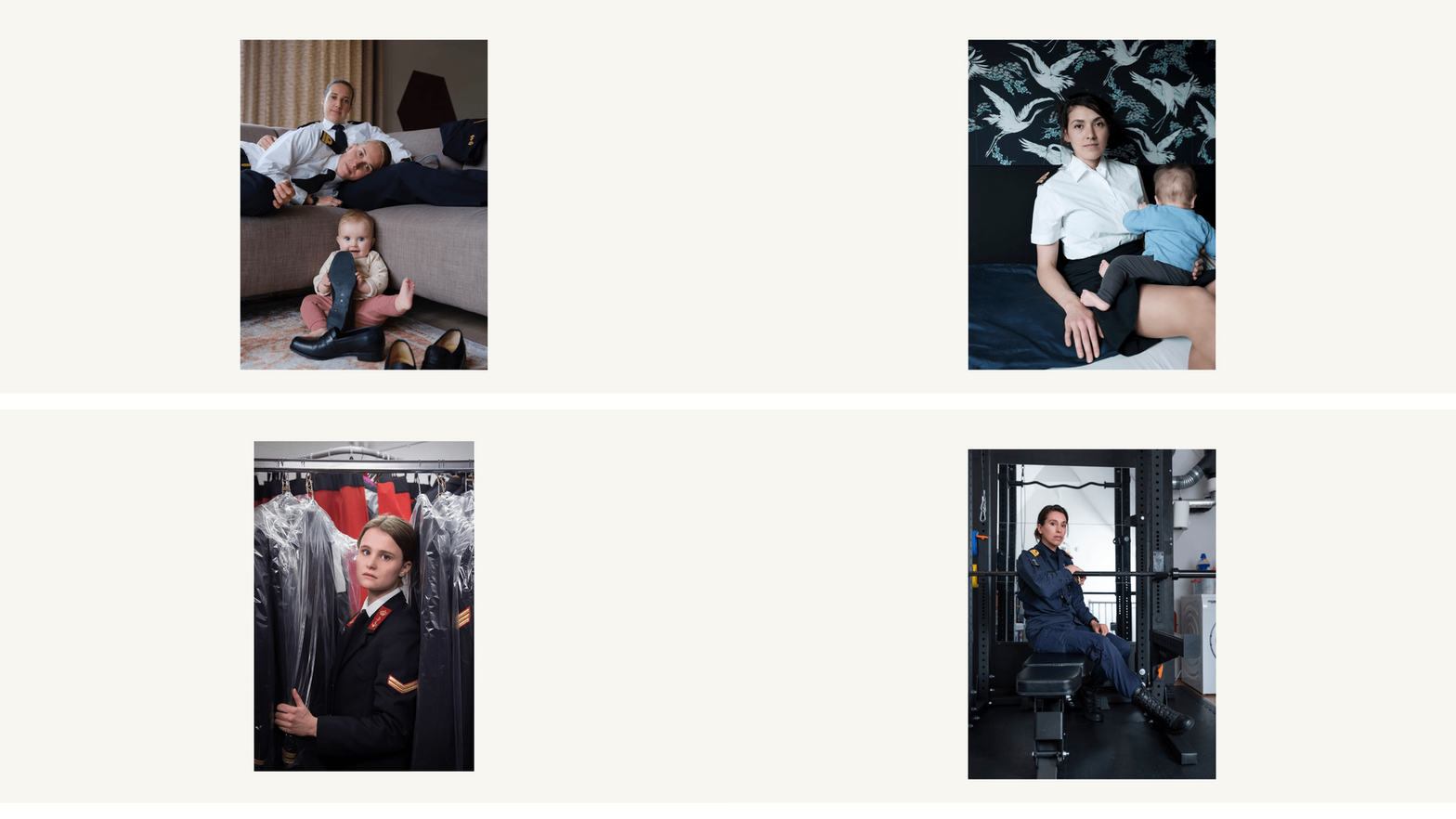
Bij de marine: ‘Oorlog voelt dichterbij dan ooit’
Fotograaf Vivian Keulards portretteerde in 2015 vrouwen op de marine-opleiding. Hoe ziet hun leven er nu uit? „Natuurlijk denk ik na over de vraag ‘wat als’. Hoe ver ben ik bereid te gaan als Nederland in oorlog raakt?”
Meer In Beeld
Meer
Leven
Recensie
Van de kaart
Verbluffend verrassende gerechten bij tapasbar La Rana
Bij La Rana weten de tapas Joël Broekaert te verrassen. Bakbanaan met bonen en zwarte knoflook? Nog nóóit gehad, maar ontzettend fascinerend.
Huiswaarts
In de bloemkoolwijk met z’n allen knus onder één dak
In de 1 miljoen huizen in bloemkoolwijken wonen Nederlanders graag. Maar architecten kijken erop neer, schrijft Bernard Hulsman.
Autotest
Je weet letterlijk niet wat je ziet
De Chinese Omoda E5, suv in het B-segment. Het design is een zoekplaatje van stijlcitaten. Je vraagt je af of hij door mensen is ontworpen, schrijft Bas van Putten.
Reportage
Wijn
Natúúrlijk schenk je hier een jacquère bij
Op het NK streden vijftien sommeliers om de grootste nationale eretitel. Regio’s, druiven, decanteren, welke wijn bij een gerecht. „Je ziet vaak niet hoe hard deze mensen studeren.”
Meer Leven
Meer
Carrière
Rubriek
DILEMMA'S OP DE WERKVLOER
Ik wil minder werken vanwege de werkdruk
Je hebt stress op je werk en neemt dat gevoel ook mee naar huis. Kun je zomaar minder gaan werken dan in je contract staat, en is dat ook de beste oplossing?
Rubriek
Spitsuur
‘Dit is voor ons een megaspitsuur in het leven’
Ze hebben vier jonge kinderen en veranderden net van baan. Oscar Hinze en Elsbeth Vermeulen verdienen nu veel minder en kunnen dus ook niet groter gaan wonen. „Maar wel fijn dat we dezelfde stap gezet hebben naar meer maatschappelijk betrokken werk.”
Interview
Leiderschap
Hoogleraar Judi Mesman: ‘Er zit altijd wel een wit iemand in het publiek die zegt: ‘Roodharigen worden toch ook gepest’’
Er was bijna geen onderzoek gedaan naar mensen van kleur in leiderschapsposities, dus deed hoogleraar Judi Mesman het maar zelf. „Er is zoveel onbegrip over wat deze mensen meemaken.”
Dilemma's op de werkvloer
Hoe bouw je met long covid je werk weer op?
Werknemers met long covid stuiten vaak op onbegrip op hun werk. Hoe kun je een constructief gesprek voeren met je baas, zodat je langzaam weer aan de slag kunt?
Meer Carrière
Meer
Tech en Media
Fotoprijs
World Press Photo bekroont ‘piëta’ van de Gaza-oorlog
De World Press Photo van het Jaar toont een treurende Palestijnse vrouw in Gaza, met op schoot het lichaam van haar omgekomen nichtje dat ze omarmt en tegen zich aan klemt. Ook minder actuele foto’s werden bekroond.
Recensie
Podcastclub
Wat kost rust in een razende wereld?
Mirjam van Zuidam tipt een podcast over de zoektocht naar mogelijk verborgen gevaren van meditatietechnieken.
Recensie
Podcastclub
Feiten en fabels over gezond leven
Net als iedereen heeft Mirjam van Zuidam vragen. Verraden onze genen hoe gezond we zijn? Ben je wat je moeder eet? Kan gezondheid in een potje zitten? En hoe slecht is alcohol nou echt?
Recensie
Podcastclub
Een rauwe podcast over een tot de verbeelding sprekende liefde in New York
Mirjam van Zuidam luisterde ademloos naar een hartverscheurende podcast over twee geliefden in New York. Ze woonden in een etalage, tot hij werd doodgeschoten door de politie.
Meer Tech en Media
Meer
Sport
Tactiek Feyenoord
De data-paradox bij Feyenoord: dominanter voetbal en meer kansen, maar minder doelpunten
Hoe ontwikkelde coach Arne Slot een iets andere speelwijze bij Feyenoord, dat zondag de finale van de KNVB-beker tegen NEC speelt? „Iemand die er niet zo veel verstand van heeft zal denken: ze doen nog hetzelfde.”
Interview
Voetbal
NEC-doelman Jasper Cillessen droomt van Europese avonden in Nijmegen
Doelman Jasper Cillessen staat zondag met NEC in de finale van de KNVB-beker. „Ik geniet hiervan. Ik ben ook gewoon supporter.”
Champions League
Real Madrid tegen Manchester City benaderde in fases de perfectie. Verslag van een schitterend gevecht
De kwartfinale tussen Manchester City en Real Madrid was van een zeldzaam hoog niveau. De passes, zo strak op maat. De aannames, zo in controle. De techniek, zo uitgebalanceerd.
Autosport
Formule 1 is in China een nichesport, maar populairder dan ooit
Nu de Formule 1 na vijf jaar weer terug is in China, lijkt de sport daar populairder dan ooit. Mede dankzij China's eerste F1-coureur Zhou Guanyu, wiens toekomst in de sport verre van zeker is. Wat blijft er over van het enthousiasme als Zhou verdwijnt?
Meer Sport
Meer
Ondertussen
Column
Frits Abrahams
Tegen machtsmisbruik
Deze week nam Joep Dohmen afscheid van zijn krant, NRC. Hij gaat als 64-jarige met prepensioen. Hij was eraan toe na een stressvolle loopbaan als onderzoeksjournalist, een van de…
Ikje
Zakjes
Tijdens mijn bekkenbodemspreekuur zie ik, gynaecoloog, een vrouw die klaagt over een moeilijke stoelgang.
Boek uit de kast
In Alphen: weggejaagd bij de kachel, de toekomst in
Uit straatboekenkastjes in Nederland haalt Arjen Fortuin een boek, bespreekt het, en geeft het door. Vandaag Van de Hulst Jr. ‘Ik ben een oude juffrouw’

:format(webp)/s3/static.nrc.nl/images/gn4/stripped/data114493341-f64e21.jpg)
:format(webp)/s3/static.nrc.nl/liveblog/files/2024/04/web-1904binbloggaza.jpg)
/s3/static.nrc.nl/bvhw/files/2024/04/data114429911-33ebc4.jpg)
/s3/static.nrc.nl/bvhw/files/2024/04/data114479807-7df823.jpg)
/s3/static.nrc.nl/wp-content/uploads/2024/04/web-1804binbloembollen.jpg)
/s3/static.nrc.nl/images/gn4/stripped/data114474765-1efb63.jpg)
/s3/static.nrc.nl/images/gn4/stripped/data114487178-8d519b.jpg)
/s3/static.nrc.nl/wp-content/uploads/2024/04/web-1804binrechtbank.jpg)
/s3/static.nrc.nl/images/gn4/stripped/data114475862-18beb8.jpg)
/s3/static.nrc.nl/wp-content/uploads/2024/04/web-1804binmivd.jpg)
/s3/static.nrc.nl/wp-content/uploads/2024/04/web-1904binloodgieter.jpg)
/s3/static.nrc.nl/images/gn4/stripped/data114484095-84e510.jpg)
/s3/static.nrc.nl/wp-content/uploads/2024/04/web-1804binwaddenzee.jpg)
/s3/static.nrc.nl/wp-content/uploads/2024/04/web-1804binasielhotelalbergen.jpg)
/s3/static.nrc.nl/wp-content/uploads/2024/04/web-1804binsupermarktden-haag.jpg)
/s3/static.nrc.nl/bvhw/files/2024/04/data114479807-7df823.jpg)
/s3/static.nrc.nl/bvhw/files/2024/04/data114477508-0f74dd.jpg)
/s3/static.nrc.nl/images/gn4/stripped/data114493341-f64e21.jpg)
:format(jpeg):fill(f8f8f8,true)/s3/static.nrc.nl/bvhw/wp-content/blogs.dir/114/files/2019/07/roosmalen-marcel-van-online-homepage.png)
/s3/static.nrc.nl/liveblog/files/2024/04/web-1904binbloggaza.jpg)
/s3/static.nrc.nl/bvhw/wp-content/blogs.dir/114/files/2019/07/roosmalen-marcel-van-online-homepage.png)
/s3/static.nrc.nl/bvhw/files/2024/04/data114477508-0f74dd.jpg)
/s3/static.nrc.nl/images/gn4/stripped/data114344399-6ef414.jpg)
/s3/static.nrc.nl/images/gn4/stripped/data114479558-d50bcf.jpg)
/s3/static.nrc.nl/bvhw/files/2024/04/data114382689-bde870.jpg)
/s3/static.nrc.nl/bvhw/files/2024/04/data114392739-64fd2a.jpg)
/s3/static.nrc.nl/wp-content/uploads/2024/04/18134626/data114443882-1fdb41.jpg)
/s3/static.nrc.nl/wp-content/uploads/2024/04/18171658/data114443885-ad860a.jpg)
/s3/static.nrc.nl/bvhw/files/2024/04/data114473749-a5b50c.jpg)
/s3/static.nrc.nl/taxonomy/9db82ae-Jensen%252C%2520Stine%252001%25201280.png)
/s3/static.nrc.nl/images/gn4/stripped/data100284253-1d7e73.png)
/s3/static.nrc.nl/images/gn4/stripped/data114443142-9d1095.jpg)
/s3/static.nrc.nl/images/gn4/stripped/data114429038-06f8b0.jpg)
/s3/static.nrc.nl/images/gn4/stripped/data114425928-212c72.jpg)
/s3/static.nrc.nl/images/gn4/stripped/data114217025-df0e34.jpg)
/s3/static.nrc.nl/bvhw/wp-content/blogs.dir/114/files/2019/10/trujilo5bij3.png)
/s3/static.nrc.nl/images/gn4/stripped/data114494638-347a72.jpg)
/s3/static.nrc.nl/wp-content/uploads/2024/04/web-1904binloodgieter.jpg)
/s3/static.nrc.nl/images/gn4/stripped/data114475508-99adaf.jpg)
/s3/static.nrc.nl/images/gn4/stripped/data114471123-5193d9.jpg)
/s3/static.nrc.nl/bvhw/files/2024/04/data114433137-36730d.jpg)
/s3/static.nrc.nl/images/gn4/stripped/data114434951-eea240.jpg)
/s3/static.nrc.nl/images/gn4/stripped/data114475080-ed89a3.jpg)
/s3/static.nrc.nl/images/gn4/stripped/data114437367-44e7ee.jpg)
/s3/static.nrc.nl/images/gn4/stripped/data114450581-bd7b64.jpg)
/s3/static.nrc.nl/images/gn4/stripped/data114428160-da1bab.jpg)
/s3/static.nrc.nl/wp-content/uploads/2024/04/18172114/Artboard-3%25403x-100.jpg)
/s3/static.nrc.nl/images/gn4/stripped/data114392544-1152dc.jpg)
/s3/static.nrc.nl/images/gn4/stripped/data114444150-a732bd.jpg)
/s3/static.nrc.nl/images/gn4/stripped/data114385952-e0aeff.jpg)
/s3/static.nrc.nl/images/gn4/stripped/data114484095-84e510.jpg)
/s3/static.nrc.nl/images/gn4/stripped/data114476735-a83a50.jpg)
/s3/static.nrc.nl/images/gn4/stripped/data114428027-2bbeeb.jpg)
/s3/static.nrc.nl/images/gn4/stripped/data114474354-0fcc52.jpg)
/s3/static.nrc.nl/images/gn4/stripped/data114180430-700b8d.jpg)
/s3/static.nrc.nl/images/gn4/stripped/data114471372-b09c02.jpg)
/s3/static.nrc.nl/wp-content/uploads/2024/04/17153809/data114429602-c7ce7f.jpg)
/s3/static.nrc.nl/inbeeld/files/2024/04/web-inbeeldgazareturn11.jpg)
/s3/static.nrc.nl/inbeeld/files/2024/04/1104ingukraineamputees11.jpg)
/s3/static.nrc.nl/inbeeld/files/2024/04/1404inbindruk7.jpg)
/s3/static.nrc.nl/images/gn4/stripped/data114424429-32deae.jpg)
/s3/static.nrc.nl/images/gn4/stripped/data114387393-0c1dd3.jpg)
/s3/static.nrc.nl/wp-content/uploads/2024/04/17182301/web-2004ZATlev_autotest.jpg)
/s3/static.nrc.nl/wp-content/uploads/2024/04/17114210/data114386195-0d9620.jpg)
/s3/static.nrc.nl/wp-content/uploads/2024/04/14184621/data114224455-da6bc1.jpg)
/s3/static.nrc.nl/images/gn4/stripped/data114171680-afd7d2.jpg)
/s3/static.nrc.nl/wp-content/uploads/2024/04/09164125/data114039144-e0f3ef.jpg)
/s3/static.nrc.nl/wp-content/uploads/2024/04/08091134/data113898468-47d8fa.jpg)
/s3/static.nrc.nl/images/gn4/stripped/data114474765-1efb63.jpg)
/s3/static.nrc.nl/bvhw/files/2024/04/1704740981642-94df82e5a342e842e82b1e6b1638fdf8.jpeg)
/s3/static.nrc.nl/bvhw/files/2024/04/op-je-gezondheid1400a27b8037f9e86f938bf284f3a8f9822c.jpg)
/s3/static.nrc.nl/bvhw/files/2024/04/image.jpg)
/s3/static.nrc.nl/images/gn4/stripped/data114475704-9a0b0a.jpg)
/s3/static.nrc.nl/images/gn4/stripped/data114488002-e27ddf.jpg)
/s3/static.nrc.nl/images/gn4/stripped/data114457710-4daf8c.jpg)
/s3/static.nrc.nl/images/gn4/stripped/data114438732-88a43b.jpg)
/s3/static.nrc.nl/wp-content/uploads/2019/07/fritshome.png)
:format(jpeg):fill(f8f8f8,true)/s3/static.nrc.nl/bvhw/wp-content/blogs.dir/114/files/2019/07/ikje5bij3-1.png)
/s3/static.nrc.nl/images/gn4/stripped/data114474257-4894cd.jpg)