Sluit menu
Binnenland
Buitenland
Economie
Den Haag
Cultuur
Wetenschap
Sport
Opinie
Columnisten
Tech en Media
Boeken
Leven
Slim leven
In Beeld
Carrière
Klimaat
Recht
Podcast
Archief
Luister naar
Commentaar
Ombudsman
Puzzels
Magazine
Service
Webwinkel
Familieberichten
Over NRC
Service
Bezorgservice
Onderbrekingsservice
Verhuisservice
Mijn gegevens
Mijn abonnementen
FAQ Digitaal Lezen
Nieuwsbrieven
Veelgestelde vragen
Mijn leeslijst
Digitale krant
Wachtwoord vergeten
Menu
NRC
Abonneren
Mijn nieuws
Podcasts
Digitale krant
Puzzels
Mijn NRC
Terug
Lees meer
Inloggen
Neem een abonnement
Mijn nieuws
Mijn leeslijst
Mijn geschiedenis
Digitale krant
Nieuwsbrieven
Onderwerpen
Ik ben abonnee
Neem een abonnement
Instellingen
Weergaveopties
Uitloggen
Hoe kunt u ons bereiken?
Vanwege het coronavirus werken onze medewerkers thuis.
Service
Privacy-instellingen
Notificaties
Lichte weergave
Donkere weergave
Volg instellingen van mijn apparaat
Bezorgservice
Vakantieservice
Verhuisservice
Mijn gegevens
Mijn abonnementen
Abonnement delen
Gedeeld abonnement
FAQ Digitaal Lezen
Veelgestelde vragen
Wachtwoord vergeten
Mijn nieuws
Binnenland
Buitenland
Economie
Den Haag
Cultuur
Wetenschap
Opinie
Boeken
Leven
Carrière
Webwinkel
Puzzels
Al abonnee?
Inloggen
Vandaag
Fotoprijs
World Press Photo bekroont ‘piëta’ van de Gaza-oorlog
De World Press Photo van het Jaar toont een treurende Palestijnse vrouw in Gaza, met op schoot het lichaam van haar omgekomen nichtje dat ze omarmt en tegen zich aan klemt. Ook minder actuele foto’s werden bekroond.
Zelfdoding
Minstens 172 mensen overleden door het innemen van zelfdodingspoeder middel X
Voor het eerst is onderzocht hoeveel mensen stierven door middel X. Dat zijn niet alleen ouderen. „Het is een zeer diverse groep.”
Reportage
Gevechtsvliegtuigen
Voor de Oekraïense gevechtsvliegers-in-opleiding komen die drie Nederlandse F-16’s niets te vroeg
Defensieminister Ollongren bracht woensdag drie F-16’s naar Roemenië, voor de opleiding van Oekraïense gevechtsvliegers. Maar vliegers alléén maken de F-16 niet inzetbaar, waarschuwt commodore Arnoud Stallmann.
Afzettingsprocedure
Afzettingsprocedure tegen Amerikaanse minister Binnenlandse Veiligheid strandt in Senaat
Minister Alejandro Mayorkas zou volgens de Republikeinen met opzet en systematisch geweigerd hebben om wetgeving uit te voeren om de zuidelijke grens van de VS te beschermen tegen illegale migranten.
Crisis Midden-Oosten
UNWRA pleit bij VN-Veiligheidsraad voor bescherming tegen Israël
UNWRA-hoofd Lazzarini stelde in de bijeenkomst dat Israël de werkzaamheden van de organisatie in Gaza op verschillende manieren dwarsboomt, onder meer door het opzettelijk treffen van UNWRA-personeel. Hij eist onafhankelijk onderzoek.
Laatste nieuws
Meer
Biënnale van Venetië
Waarom het Israëlische paviljoen op de Biënnale in Venetië gesloten is
Kroatische parlementsverkiezingen
Conservatieve HDZ kan na verkiezingswinst aan de macht blijven in Kroatië, Ruslandgezinde SDP verliest
Gokbedrijf
PSV komt niet los van dubieuze goksponsor
Analyse
Migratie en formatie
De o zo gewenste ‘grip op migratie’ ligt ook voor vier rechtse partijen niet voor het grijpen
Privacy
Zorgen bij toezichthouder om verkeerslichten die data weggebruikers verzamelen
Champions League
Real Madrid tegen Manchester City benaderde in fases de perfectie. Verslag van een schitterend gevecht
Staatsbezoek
Koning bedankt Spanjaarden, die Amalia maandenlang opvingen na zware bedreigingen
Mishandeling
Ook bussen staan zaterdag drie minuten stil vanwege geweld tegen NS-medewerkers
Uitspraak rechtbank
Geld verloren toen online gokken nog illegaal was? Dan moet het bedrijf terugbetalen, oordeelt rechter
Analyse
Nieuw album
De buzz volgt Taylor Swift, niet andersom: haar nieuwe album heeft geen singles nodig
Meest gelezen
Reportage
Gevechtsvliegtuigen
Voor de Oekraïense gevechtsvliegers-in-opleiding komen die drie Nederlandse F-16’s niets te vroeg
Column
Hubert Smeets
Stockholmsyndroom beheerst de formatie
Column
Mark Lievisse Adriaanse
Wie het Goede wil doen, moet boksen
Fotoprijs
World Press Photo bekroont ‘piëta’ van de Gaza-oorlog
Zelfdoding
Minstens 172 mensen overleden door het innemen van zelfdodingspoeder middel X
Meer nieuws
Niet te missen
Column
Mark Lievisse Adriaanse
Wie het Goede wil doen, moet boksen
Ergens halverwege 'Morele Ambitie' begon het me te dagen. Na het uitlezen van ‘de nieuwe Bregman’ wist ik het zeker.
Opinie
Ict-problemen
Een minister voor Digitale Zaken is hoognodig
Doormodderen in het verouderde ict-moeras van de overheid is niet langer verantwoord, schrijven Onno Eric Blom en Alexander Klöpping.
Column
Sarah Sluimer
Rabiate housewives
Real housewives of Amsterdam Tamara Elbaz en Maria Tailor, die in hun podcast Sophie Hilbrand omschreven ‘alsof ze al 20 jaar geleden is gestorven en aan het ontbinden is’ mochten bij diezelfde Sophie komen aanschuiven om het over verlammende schoonheidsidealen te hebben.
Analyse
Nieuw album
De buzz volgt Taylor Swift, niet andersom: haar nieuwe album heeft geen singles nodig
We weten bijna niets van het nieuwe album van Taylor Swift dat vrijdag uitkomt, en toch heeft iedereen het erover. Hoe kan het dat ze zo'n buzz creëert uit het niets?
tv-recensie
De regio als plaats delict en als decor voor drama
Het zou niet verbazen als er van het ingrijpende dorpsdrama in Drenthe een serie wordt gemaakt. Er lijkt in ieder geval ruimte voor meer verhalen uit de regio. Het platteland in de serie 'Zussen' is romantisch en traag.
Cultuur uitgelicht
Israël
Micha Wertheim bezoekt Israël, met de hoop dat kunst een land kan veranderen
Cabaretier Micha Wertheim is een groot bewonderaar van de Israëlische choreograaf Ohad Naharin. In Tel Aviv zoekt Wertheim hem op, en vraagt zich af wat dans in deze donkere tijden kan betekenen – voor Israël en hemzelf.
Series
Is ‘Sex and the City’ 25 jaar later nog leuk? ‘Nu zou Carrie een klacht indienen’
‘Sex and the City’ toonde eind jaren negentig op vernieuwende wijze het leven van single vrouwen in New York. Nu Netflix de serie 25 jaar later opnieuw laat zien, vragen Sandra Heerma van Voss (1972), fan van het eerste uur, en NRC-televisiecriticus Amber Wiznitzer (1996) zich af: hoe komt de serie nu over?
Jetske Mijnssen
Regisseur Jetske Mijnssen ensceneert Donizetti bij De Nationale Opera: ‘Je kunt niet alles achter je schrijftafel bedenken’
Operaregisseur Jetske Mijnssen legt, na jaren voorbereiding, de laatste hand aan Roberto Devereux. Dit laatste deel van een drieluik Donizetti-opera’s is vanaf 18 april te zien bij De Nationale Opera.
cultuur
Meer
Opinie & Columns
Column
Ellen Deckwitz
Taylor Swift is een gevaar
Deze vrijdag komt het nieuwe album van Taylor Swift uit en de fans in mijn omgeving kunnen inmiddels niet meer slapen van ongeduld.
Opinie
Leefbaarheid
Geef leraar, agent en verpleegkundige voorrang bij wonen
Bestaanszekerheid bieden en kansenongelijkheid bestrijden begint in de slechtste wijken, zegt Lodewijk Asscher. Verander de balans in de buurt.
TV-Recensie
Sywert van Lienden eerst op tv en dan voor de rechter
Naastenliefde is een belangrijk thema in de programma’s van Tijs van den Brink. Bij ‘Op1’ mocht hij zich over een ethisch dilemma buigen: mag je in tijden van corona net doen alsof je uit naastenliefde mondkapjes uitdeelt terwijl je in werkelijkheid gillend rijk wordt?
Meer Opinie & Debat
Meer
Beste van NRC
Gokbedrijf
PSV komt niet los van dubieuze goksponsor
PSV sloot jaren geleden een schimmige sponsorovereenkomst met het Aziatische gokbedrijf Wellbets. De club staat nog steeds op de website. Na publicatie in NRC probeerde de Eindhovense voetbalclub zijn naam van de website van het bedrijf te laten verwijderen, maar tevergeefs.
Gekweekt varkenvlees
Eindelijk mocht het in Nederland: kweekvlees proeven. En?
Voor het eerst kon woensdag in Nederland kweekvlees geproefd worden, bij start-up Meatable in Leiden. Op het menu: een ogenschijnlijk doodgewoon varkensworstje. NRC proefde mee.
Reportage
Onderwijs
Filmpjes over wiskunde bingen de avond voor je toets: ‘Niet alle helden dragen capes, sommige hebben een gigantische geodriehoek’
Scholieren lopen weg met ‘Math with Menno’, van YouTube-wiskundedocent Menno Lagerwey. Toch moedigt niet iedere leraar dat aan: leerlingen zouden minder participeren in de klas en niet oefenen met sommen. „Ze worden lui”, zeggen sommige leraren.
Oliesancties
Griekse olietankers helpen Rusland sancties te ontduiken. Toch blijven ze welkom in Nederlandse havens
Met het overladen van olie op volle zee en het ontwijken van Westerse sancties helpt de Griekse tankervloot Rusland. Hun schepen komen gewoon olie brengen naar Amsterdam en Rotterdam.
Meer Beste van NRC
Meer
De meest recente podcasts
Podcast
Beginnende schuld? Dan kan je maar beter in de juiste gemeente wonen
Podcast
Is de jacht op PFAS doorgeslagen?
Podcast
Verpesten Nederlanders hun kinderen?
Podcast
Hoe het einde van de gaswinning leidde tot een conflict over miljarden euro’s
Podcast
Schrijver Désanne van Brederode over het vinden van het vuur in onszelf
Podcast
Aflevering 8: Conclusies
Podcast
Aflevering 8: Hoe een samenleving de Zwarte Dood overleeft
Meer
Meer
Mijn nieuws
Meer artikelen
Meer
Binnenland
Staatsbezoek
Koning bedankt Spanjaarden, die Amalia maandenlang opvingen na zware bedreigingen
Prinses Amalia studeerde maandenlang in de Spaanse hoofdstad Madrid, nadat ze vanwege bedreigingen niet kon studeren in Amsterdam.
Ex-terrorismeverdachten
Ex-terrorismeverdachten na hun vrijspraak: ontslagen, vrienden kwijt en psychische klachten. Ze eisen geld van het OM
Ze werden verdacht van terroristische activiteiten, maar vrijgesproken. Nu eisen negen mannen uit Eindhoven een forse schadevergoeding. „Ik weet niet of ik nog kan reizen.”
Mishandeling
Ook bussen staan zaterdag drie minuten stil vanwege geweld tegen NS-medewerkers
Eerder lieten de NS en streekvervoerder Arriva al weten hun treinen zaterdagavond drie minuten stil te zetten. Bussen sluiten zich daar nu bij aan.
Meer Binnenland
Meer
Politiek Den Haag
Volg
Politiek Den Haag
Adoptie
Wordt adoptie uit het buitenland direct verboden? En nog vier vragen over adoptie
Een Kamermeerderheid vraagt het demissionaire kabinet om een einde te maken aan adoptie van kinderen uit het buitenland. „De kans op misstanden zal altijd blijven bestaan.”
Analyse
Migratie en formatie
De o zo gewenste ‘grip op migratie’ ligt ook voor vier rechtse partijen niet voor het grijpen
Ze willen allemaal minder migratie, maar de vier formerende partijen verschillen behoorlijk van mening over de vraag hoe dat het best te bereiken is. Vooral NSC en PVV staan tegenover elkaar.
Groningen
Zelfs ‘de waakvlam’ van het Groninger gasveld gaat uit: senaat vóór einde gaswinning
De Eerste Kamer liet er dinsdag geen twijfel over bestaan. De Groningse gaswinning stopt. „Een historische dag.”
Kabinetsformatie
Moeizame onderhandelingen over migratie, maar geen formatiecrisis na het weglopen van Wilders
PVV-leider Geert Wilders liep maandag weg bij de onderhandelingen over asiel en migratie. Zijn onderhandelingspartners relativeren die actie, maar NSC-leider Pieter Omtzigt zegt ook: „Als je zegt: we gaan rechterlijke uitspraken negeren, dan is dat voor ons een rode lijn.”
Meer Den Haag
Meer
Buitenland
Concurrentiekracht
De interne markt is niet per se meer hét succesnummer van de EU: dit zijn de drie plagen
De EU ligt in veel economische sectoren achter op concurrenten VS en China. Er is veel bureaucratie, risicokapitaal vloeit vaak naar de VS, en elders krijgen bedrijven meer staatssteun.
Ruzie onder Republikeinen
Amerikaanse hulp voor Oekraïne een stap dichterbij – maar nog altijd onzeker
De Republikeinse Huisvoorzitter Johnson heeft de steun van partijleider Trump, maar zet met een opgeknipt pakket internationale hulp zijn eigen positie op het spel.
Reportage
Venezuela
Gloednieuwe winkelcentra en champagne in de schappen: ineens staat Venezuela niet meer aan de rand van de afgrond
In Caracas puilen de supermarkten uit met buitenlandse producten – met dank aan de dollar en olie. Het regime van president Maduro onderdrukt ondertussen elke kritiek of oppositie. „Voor gedachten kun je al worden opgesloten.”
Roken
Strengste antirookwet ter wereld: Britten geboren na 2009 mogen nooit meer sigaretten kopen
Met steun van oppositiepartij Labour wist de Britse premier Rishi Sunak een zeer strenge antirookwet door het Lagerhuis te loodsen. De wet beoogt een forse daling van het aantal rokers door jongeren de rest van hun leven te verbieden om tabak te kopen.
Meer Buitenland
Meer
Economie
Nederlandse industrie
Verduurzaming van de industrie stagneert, tot frustratie van alle betrokkenen
Hoe moet het verder met de vergroening van de industrie? Daarover sprak de Tweede Kamer woensdag met bijna alle hoofdrolspelers. Die bleken het erover eens dat het niet goed loopt: de afspraken over staatssteun komen te langzaam tot stand.
Burgerservicenummers
Nieuwe signalen van georganiseerde toeslagenfraude vanuit Bulgarije
Financiën heeft „signalen ontvangen over mogelijk misbruik van toeslagen in georganiseerd verband” vanuit Bulgarije. Hierbij zouden tussenpersonen zijn ingezet.
Voorjaarsvergadering IMF
VS trekken wereldeconomie omhoog, maar vormen ook een risico, zegt IMF
Ondanks alle oorlogen en geopolitieke spanningen blijft de wereldeconomie redelijk goed draaien, schrijft het Internationaal Monetair Fonds in zijn halfjaarlijkse economische rapport. Nóg wel – want de risico’s stapelen zich op.
Meer Economie
Meer
Wetenschap
Column
Beatrice de Graaf
Grote woorden in een wereld die steeds wankeler wordt
Macht gaat gepaard met verantwoordelijkheid, zei Spiderman al. Regeringsleiders die een grote mogendheid willen zijn, moeten we bloedserieus nemen, vindt Beatrice de Graaf.
Jong geleerd
‘Op Mars stroomt modder zonder dat er water aan te pas komt’
Net als op aarde zijn er op Mars restanten te zien van modderstromen. Maar hoe kan er op de buurplaneet nog steeds modder stomen, als er geen water is? Lonneke Roelofs heeft een idee.
Wiskunde
Mathematisch biljarten levert ragfijne patronen op: ‘Het werd een beetje een obsessie’
Een wiskundige biljartbal kan oneindig doorkaatsen. Als de bal geheugen heeft, botst-ie tegen het eerder achtergelaten spoor.
Ophef
Chatbots die het werk van chatbots beoordelen? Het is verleidelijk
Voor de kwaliteit van wetenschap is het belangrijk dat vakgenoten elkaars werk beoordelen. De inzet van chatbots hierbij is discutabel.
Meer Wetenschap
Meer
Cultuur
Biënnale van Venetië
Waarom het Israëlische paviljoen op de Biënnale in Venetië gesloten is
Het paviljoen van Israël op de kunstbiënnale in Venetië blijft gesloten. Er hangt een briefje op de glazen deur, dat het statement verklaart aan de bezoekers. De kunstenaar en haar curator tonen daarmee hoe effectief kunst kan zijn.
Biënnale Venetië
|
●●●●
In het Nederlandse paviljoen in Venetië ruikt het zoet, maar zijn de expressieve cacaobeelden indringend
De cacaobeelden van het Congolese kunstenaarscollectief CATPC verspreiden een zoete geur door het Nederlandse paviljoen op de Biënnale van Venetië. Samen vertellen ze een indringend, samenhangend verhaal over dekolonisering.
Interview
Cabaret
Cabarettrio Jeroens Clan zingt anti-wokeliedjes als bejaardenband ‘De Rocketboomers’
Jeroens Clan is op tour met zijn tweede voorstelling. In ‘Korte metten’ levert het drietal met komische dialogen, snelle sketches en liedjes kritiek op slachtofferschap.
Recensie
Theater
|
●●●
YouTube-fenomeen ‘De Joardy Show’ is ook in het theater droogkloterij van de hoogste plank
De makers van YouTube-kanaal Joardy Film brengen hun droogkomische typetjes (de Huilon-man incluis) naar het toneel in de nieuwe voorstelling ‘De Joardy Show’.
In Beeld
In Beeld
Gazanen keren terug naar het verwoeste noorden
Sinds steeds meer Israëlische troepen zich terugtrekken uit het noorden van Gaza, keren veel ontheemde Palestijnen terug naar hun inmiddels verwoeste woonplaats. Op beelden is te zien hoe duizenden mensen met bagage, fietsen en karren over de levensgevaarlijke kustweg naar het noorden van Gaza lopen.
In beeld
De terugkeer van Oleksandr Revtjoech naar het burgerleven
Oleksandr Revtjoech stoot met een rechtse directe in op zijn tegenstander. Acht maanden nadat hij zijn linkerarm en het grootste deel van zijn linkerbeen heeft verloren door mijnontploffingen tijdens gevechten in Oekraïne revalideert hij in de boksring.
in beeld
Dit zijn de indrukwekkendste foto’s van deze week
In de week dat moslims het einde van de Ramadan vierde, brak in Rusland opnieuw de dam in de rivier Oeral door, was er een totale zonsverduistering te zien in delen van Mexico, de Verenigde Staten en Canada en stemde een meerderheid van het Europarlement in met de oproep om abortus als mensenrecht te erkennen.
Fotografie
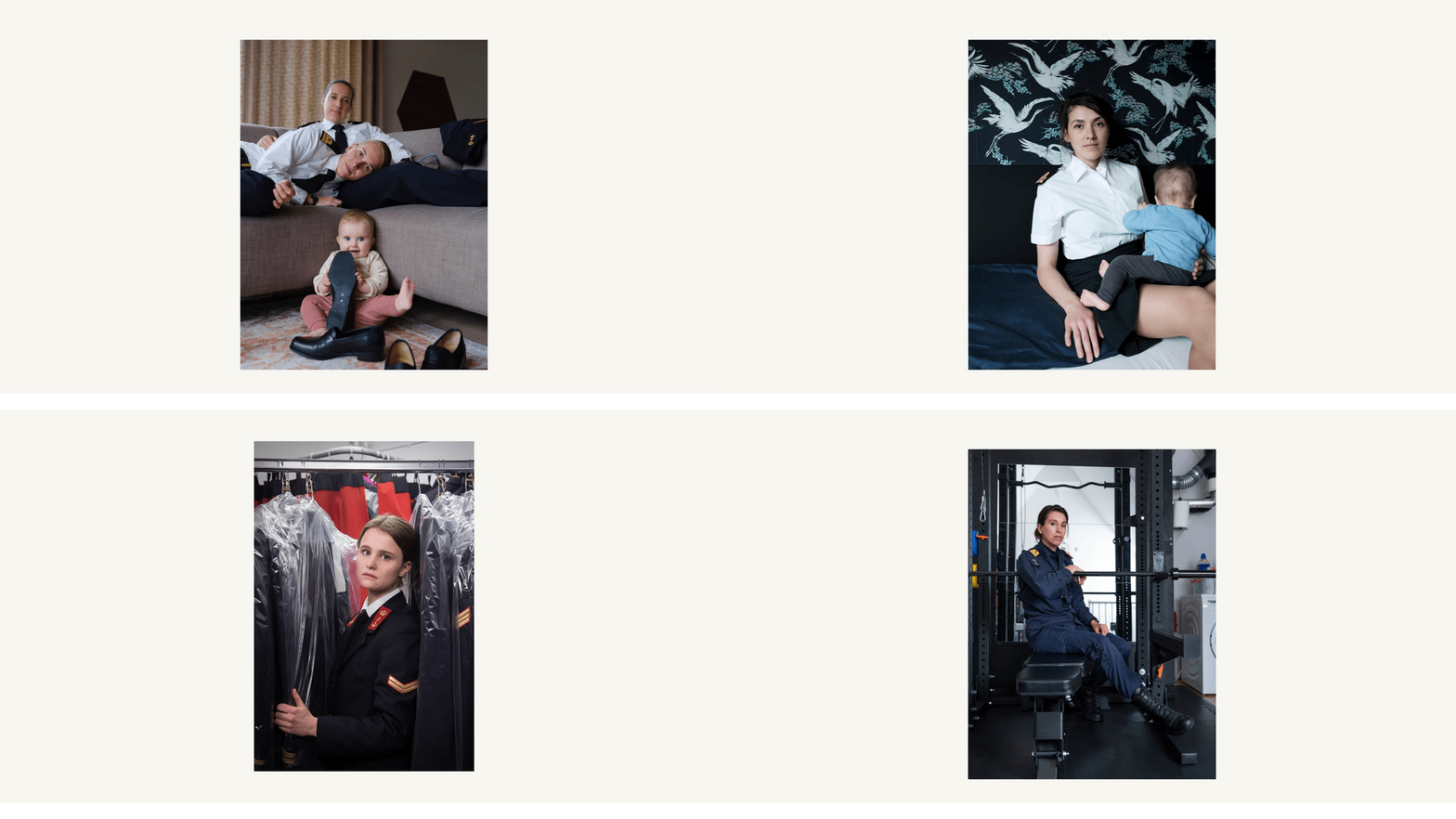
Bij de marine: ‘Oorlog voelt dichterbij dan ooit’
Fotograaf Vivian Keulards portretteerde in 2015 vrouwen op de marine-opleiding. Hoe ziet hun leven er nu uit? „Natuurlijk denk ik na over de vraag ‘wat als’. Hoe ver ben ik bereid te gaan als Nederland in oorlog raakt?”
Meer In Beeld
Meer
Leven
Recensie
Van de kaart
Verbluffend verrassende gerechten bij tapasbar La Rana
Bij La Rana weten de tapas Joël Broekaert te verrassen. Bakbanaan met bonen en zwarte knoflook? Nog nóóit gehad, maar ontzettend fascinerend.
Huiswaarts
In de bloemkoolwijk met z’n allen knus onder één dak
In de 1 miljoen huizen in bloemkoolwijken wonen Nederlanders graag. Maar architecten kijken erop neer, schrijft Bernard Hulsman.
Autotest
Je weet letterlijk niet wat je ziet
De Chinese Omoda E5, suv in het B-segment. Het design is een zoekplaatje van stijlcitaten. Je vraagt je af of hij door mensen is ontworpen, schrijft Bas van Putten.
Reportage
Wijn
Natúúrlijk schenk je hier een jacquère bij
Op het NK streden vijftien sommeliers om de grootste nationale eretitel. Regio’s, druiven, decanteren, welke wijn bij een gerecht. „Je ziet vaak niet hoe hard deze mensen studeren.”
Meer Leven
Meer
Carrière
Rubriek
DILEMMA'S OP DE WERKVLOER
Ik wil minder werken vanwege de werkdruk
Je hebt stress op je werk en neemt dat gevoel ook mee naar huis. Kun je zomaar minder gaan werken dan in je contract staat, en is dat ook de beste oplossing?
Rubriek
Spitsuur
‘Dit is voor ons een megaspitsuur in het leven’
Ze hebben vier jonge kinderen en veranderden net van baan. Oscar Hinze en Elsbeth Vermeulen verdienen nu veel minder en kunnen dus ook niet groter gaan wonen. „Maar wel fijn dat we dezelfde stap gezet hebben naar meer maatschappelijk betrokken werk.”
Interview
Leiderschap
Hoogleraar Judi Mesman: ‘Er zit altijd wel een wit iemand in het publiek die zegt: ‘Roodharigen worden toch ook gepest’’
Er was bijna geen onderzoek gedaan naar mensen van kleur in leiderschapsposities, dus deed hoogleraar Judi Mesman het maar zelf. „Er is zoveel onbegrip over wat deze mensen meemaken.”
Dilemma's op de werkvloer
Hoe bouw je met long covid je werk weer op?
Werknemers met long covid stuiten vaak op onbegrip op hun werk. Hoe kun je een constructief gesprek voeren met je baas, zodat je langzaam weer aan de slag kunt?
Meer Carrière
Meer
Tech en Media
Censuur
Bestuur hoger onderwijs schiet vaak met ‘grofste geschut’ op onwelgevallige artikelen
Deze week werd een artikel van het universiteitsblad van de TU Delft na juridische druk offline gehaald. Journalisten en belangenorganisaties waarschuwen al langer dat de persvrijheid in het hoger onderwijs onder druk staat.
Interview
series
Het leven van Máxima, nu als serie: ‘We maken een echt mens van haar’
De dramaserie ‘Máxima’ gaat over de jonge jaren van de koningin. De Argentijnse hoofdrolspeelster Delfina Chaves en tegenspelers Martijn Lakemeier (Willem-Alexander) en Elsie de Brauw (Beatrix) vertellen over het maakproces. „Dit was het moeilijkste wat ik ooit heb gedaan.”
Journalistiek
Duo Wendelmoet Boersema en Karel Smouter (NRC) gaat ‘Trouw’ leiden
Trouw krijgt twee hoofdredacteuren. De één werkt al jaren bij Trouw, de ander komt van NRC. Beiden met een grondige kennis van de protestantse gemeenschap.
Interview
series
‘The Sympathizer’ biedt een voor Hollywood haast radicaal nieuw perspectief
Boekverfilming ‘The Sympathizer’ volgt een communistische spion in de nasleep van de Vietnamoorlog. Wat maakt de serie zo uniek? Acteurs Hoa Xuande en Sandra Oh leggen het uit.
Meer Tech en Media
Meer
Sport
Champions League
Real Madrid tegen Manchester City benaderde in fases de perfectie. Verslag van een schitterend gevecht
De kwartfinale tussen Manchester City en Real Madrid was van een zeldzaam hoog niveau. De passes, zo strak op maat. De aannames, zo in controle. De techniek, zo uitgebalanceerd.
Autosport
Formule 1 is in China een nichesport, maar populairder dan ooit
Nu de Formule 1 na vijf jaar weer terug is in China, lijkt de sport daar populairder dan ooit. Mede dankzij China's eerste F1-coureur Zhou Guanyu, wiens toekomst in de sport verre van zeker is. Wat blijft er over van het enthousiasme als Zhou verdwijnt?
Olympische Spelen
NOC-NSF gaat vragen over affaire Atletiekunie uit de weg
De Nederlandse équipe staat er honderd dagen voor de Olympische Spelen goed voor, vindt directeur topsport André Cats. Over vermeend grensoverschrijdend gedrag binnen de atletiekploeg weigert hij te praten.
Interview
Chantal van den Broek-Blaak
Moeder worden en terugkeren in het wielerpeloton: ‘Ik dacht, er is eigenlijk niks veranderd’
Moeder én wielrenster zijn valt behoorlijk goed te combineren, ontdekte Chantal van den Broek-Blaak dit seizoen bij haar terugkeer in het profpeloton. In ieder geval tot nu toe.
Meer Sport
Meer
Ondertussen
Ikje
Mat
„Laptops dicht, alsjeblieft”, vraag ik, als ik de les wil starten. Eén leerling gaat naarstig door met klikken en typen, ook na nog een keer vragen.
Weggeefcultuur
De wilde schoenen van Berlijn wachten op straat op een nieuwe eigenaar
Wie door Berlijn wandelt, komt op straat overal schoenen zonder mensen tegen, ziet Anne-Martijn van der Kaaden.
Column
Frits Abrahams
Een goedkope ‘Tosca’
De man was me net voor. Bij de ingang van het rommelige winkeltje in van alles en nog wat – boekjes, schriftjes, affiches, prenten – was een tafeltje geplaatst met de jongste…

:format(webp)/s3/static.nrc.nl/wp-content/uploads/2024/04/18103842/Copy-of-Copy-of-Homepage-gifje-met-fade.jpg)
:format(webp)/s3/static.nrc.nl/bvhw/files/2024/04/data114429668-cd943c.jpg)
/s3/static.nrc.nl/bvhw/files/2024/04/web-1804buif16.jpg)
/s3/static.nrc.nl/wp-content/uploads/2024/04/web-1804buimayor.jpg)
/s3/static.nrc.nl/hpe/1d62d36-web-1804BUIlaza.jpg)
/s3/static.nrc.nl/images/gn4/stripped/data114471372-b09c02.jpg)
/s3/static.nrc.nl/wp-content/uploads/2024/04/afp34pm23w.jpg)
/s3/static.nrc.nl/images/gn4/stripped/data114443142-9d1095.jpg)
/s3/static.nrc.nl/images/gn4/stripped/data114434951-eea240.jpg)
/s3/static.nrc.nl/wp-content/uploads/2024/04/97656612.jpg)
/s3/static.nrc.nl/images/gn4/stripped/data114457710-4daf8c.jpg)
/s3/static.nrc.nl/wp-content/uploads/2024/04/web-1804binamalia.jpg)
/s3/static.nrc.nl/wp-content/uploads/2024/04/treinpersoneel-arriva-staakt-in-het-noorden.jpg)
/s3/static.nrc.nl/hpe/fa87b86-web-1704BINgokken2.jpg)
/s3/static.nrc.nl/images/gn4/stripped/data114435521-d3f1e3.jpg)
/s3/static.nrc.nl/bvhw/files/2024/04/web-1804buif16.jpg)
:format(jpeg):fill(f8f8f8,true)/s3/static.nrc.nl/bvhw/wp-content/blogs.dir/114/files/2019/01/smeets-hubert-online-homepage.png)
:format(jpeg):fill(f8f8f8,true)/s3/static.nrc.nl/bvhw/wp-content/blogs.dir/114/files/2022/03/lievisse-mark-2021-10-1280-01-web.png)
/s3/static.nrc.nl/wp-content/uploads/2024/04/18103842/Copy-of-Copy-of-Homepage-gifje-met-fade.jpg)
/s3/static.nrc.nl/bvhw/files/2024/04/data114429668-cd943c.jpg)
/s3/static.nrc.nl/bvhw/wp-content/blogs.dir/114/files/2022/03/lievisse-mark-2021-10-1280-01-web.png)
/s3/static.nrc.nl/images/gn4/stripped/data114388983-1d0146.jpg)
/s3/static.nrc.nl/images/gn4/stripped/data100284253-1d7e73.png)
/s3/static.nrc.nl/images/gn4/stripped/data114435521-d3f1e3.jpg)
/s3/static.nrc.nl/images/gn4/stripped/data114469412-0e517c.jpg)
/s3/static.nrc.nl/wp-content/uploads/2024/04/16163849/data114389104-afb67a.jpg)
/s3/static.nrc.nl/images/gn4/stripped/data114425928-212c72.jpg)
/s3/static.nrc.nl/bvhw/files/2024/04/data114382689-bde870.jpg)
/s3/static.nrc.nl/bvhw/wp-content/blogs.dir/114/files/2019/01/deckwitzhome.png)
/s3/static.nrc.nl/bvhw/files/2024/04/data114428280-956414.jpg)
/s3/static.nrc.nl/images/gn4/stripped/data114424252-d8cc09.jpg)
/s3/static.nrc.nl/images/gn4/stripped/data114443142-9d1095.jpg)
/s3/static.nrc.nl/images/gn4/stripped/data114429038-06f8b0.jpg)
/s3/static.nrc.nl/images/gn4/stripped/data114217025-df0e34.jpg)
/s3/static.nrc.nl/wp-content/uploads/2024/04/11170118/data114125880-a31c8a.jpg)
/s3/static.nrc.nl/wp-content/uploads/2024/04/web-1804binamalia.jpg)
/s3/static.nrc.nl/images/gn4/stripped/data114381907-789193.jpg)
/s3/static.nrc.nl/wp-content/uploads/2024/04/treinpersoneel-arriva-staakt-in-het-noorden.jpg)
/s3/static.nrc.nl/bvhw/files/2024/04/data114433137-36730d.jpg)
/s3/static.nrc.nl/images/gn4/stripped/data114434951-eea240.jpg)
/s3/static.nrc.nl/images/gn4/stripped/data114389042-e1971d.jpg)
/s3/static.nrc.nl/images/gn4/stripped/data114389571-1b5baf.jpg)
/s3/static.nrc.nl/images/gn4/stripped/data114437367-44e7ee.jpg)
/s3/static.nrc.nl/images/gn4/stripped/data114450581-bd7b64.jpg)
/s3/static.nrc.nl/images/gn4/stripped/data114428160-da1bab.jpg)
/s3/static.nrc.nl/images/gn4/stripped/data114436652-4d819d.jpg)
/s3/static.nrc.nl/images/gn4/stripped/data114444150-a732bd.jpg)
/s3/static.nrc.nl/images/gn4/stripped/data114405513-fa2426.jpg)
/s3/static.nrc.nl/images/gn4/stripped/data114388503-613241.jpg)
/s3/static.nrc.nl/bvhw/wp-content/blogs.dir/114/files/2019/01/graaf-beatrice-de-online-homepage.png)
/s3/static.nrc.nl/images/gn4/stripped/data114386456-d55684.jpg)
/s3/static.nrc.nl/images/gn4/stripped/data114435331-287dc4.jpg)
/s3/static.nrc.nl/images/gn4/stripped/data114429908-84aab9.jpg)
/s3/static.nrc.nl/images/gn4/stripped/data114471372-b09c02.jpg)
/s3/static.nrc.nl/wp-content/uploads/2024/04/17153809/data114429602-c7ce7f.jpg)
/s3/static.nrc.nl/images/gn4/stripped/data114431891-38df74.jpg)
/s3/static.nrc.nl/images/gn4/stripped/data114425966-02e562.jpg)
/s3/static.nrc.nl/inbeeld/files/2024/04/web-inbeeldgazareturn11.jpg)
/s3/static.nrc.nl/inbeeld/files/2024/04/1104ingukraineamputees11.jpg)
/s3/static.nrc.nl/inbeeld/files/2024/04/1404inbindruk7.jpg)
/s3/static.nrc.nl/images/gn4/stripped/data114424429-32deae.jpg)
/s3/static.nrc.nl/images/gn4/stripped/data114387393-0c1dd3.jpg)
/s3/static.nrc.nl/wp-content/uploads/2024/04/17182301/web-2004ZATlev_autotest.jpg)
/s3/static.nrc.nl/wp-content/uploads/2024/04/17114210/data114386195-0d9620.jpg)
/s3/static.nrc.nl/wp-content/uploads/2024/04/14184621/data114224455-da6bc1.jpg)
/s3/static.nrc.nl/images/gn4/stripped/data114171680-afd7d2.jpg)
/s3/static.nrc.nl/wp-content/uploads/2024/04/09164125/data114039144-e0f3ef.jpg)
/s3/static.nrc.nl/wp-content/uploads/2024/04/08091134/data113898468-47d8fa.jpg)
/s3/static.nrc.nl/images/gn4/stripped/data114430721-9e4e8d.jpg)
/s3/static.nrc.nl/bvhw/files/2024/04/data114220495-40a4c4.jpg)
/s3/static.nrc.nl/images/gn4/stripped/data114392982-f8b5aa.jpg)
/s3/static.nrc.nl/bvhw/files/2024/04/data113862145-3c6e7d.jpg)
/s3/static.nrc.nl/images/gn4/stripped/data114457710-4daf8c.jpg)
/s3/static.nrc.nl/images/gn4/stripped/data114438732-88a43b.jpg)
/s3/static.nrc.nl/images/gn4/stripped/data114429467-2aff03.jpg)
/s3/static.nrc.nl/images/gn4/stripped/data114392135-2fb963.jpg)
:format(jpeg):fill(f8f8f8,true)/s3/static.nrc.nl/bvhw/wp-content/blogs.dir/114/files/2019/07/ikje5bij3-1.png)
/s3/static.nrc.nl/images/gn4/stripped/data114170144-b4f185.jpg)
/s3/static.nrc.nl/wp-content/uploads/2019/07/fritshome.png)